
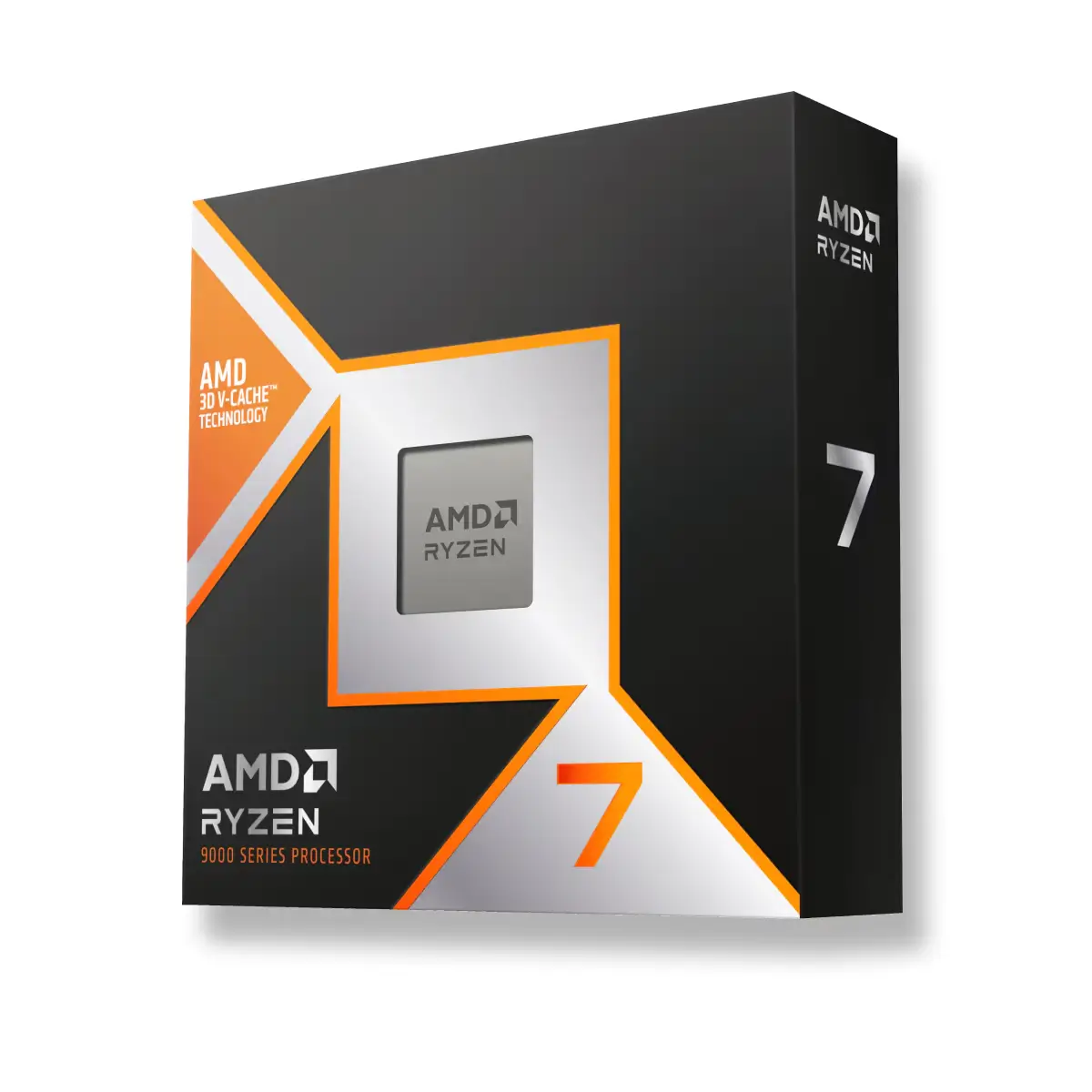
For gaming, the Ryzen 7 9800X3D is the faster chip — by a wide margin — but the Core i7-14700K is the cheaper one at TechCortex, and it does more total work. At 1080p the 9800X3D runs roughly 30% more frames; in heavily multi-threaded jobs like rendering and video encoding the 14700K's 28 threads leave the eight-core AMD chip behind. This is not the same lopsided story as the 9800X3D versus the 14900K: here the Intel chip undercuts the AMD one on price, so the choice is a real trade of gaming frames against cores and dollars.
The matchup looks uneven on a spec sheet. The 14700K lists 20 cores and 28 threads against the 9800X3D's 8 cores and 16 threads. But games rarely use more than eight cores, and they care far more about memory latency than core count — which is exactly where AMD's 3D V-Cache changes the result.
Gaming performance: cache wins at 1080p
The 9800X3D stacks 96MB of L3 cache under its cores (AMD's second-generation 3D V-Cache). That large cache keeps game data on the chip, so the CPU stops waiting on system memory and frame rates climb. Reviewers measured it as the fastest gaming CPU available at launch.
Tom's Hardware put the 9800X3D about 30% ahead of the Core i9-14900K on a 13-game geometric mean, run at 1080p on an RTX 4090. The 14700K is not in that headline number directly, but GamersNexus tested both Intel chips and found the 14700K and 14900K "effectively tied and within error of each other" in games — so the 9800X3D's lead over the 14900K is also its lead over the 14700K. GamersNexus also showed the per-game spread is wide: from around 5% in GPU-bound titles to over 50% in a cache-friendly game like Baldur's Gate 3.
The honest part: that 30% is a 1080p number, and those tests run at low resolution on purpose — to remove the graphics card as a limiter and isolate the CPU. Play at 1440p or 4K with a GPU that is working hard, and both chips feed it fast enough that the margin collapses. If you game at 4K, the CPU barely moves the needle; our best CPU for 4K gaming in 2026 guide covers where the money actually goes at that resolution, and the best CPU for 1440p gaming in 2026 does the same one step down.
Productivity: where the 14700K's threads pay off
This is the half of the comparison the gaming benchmarks hide. The 14700K has 20 cores — 8 performance plus 12 efficiency — and 28 threads; the 9800X3D has 8 cores and 16 threads (Intel). In fully multi-threaded workloads — Blender renders, video encodes, large code compiles — more threads simply finish the job faster, and the 14700K pulls well ahead of the eight-core AMD chip. It is the same core-count story that separates the 9800X3D from the 24-core 14900K, which GamersNexus measured far ahead of the 9800X3D in rendering and compression.
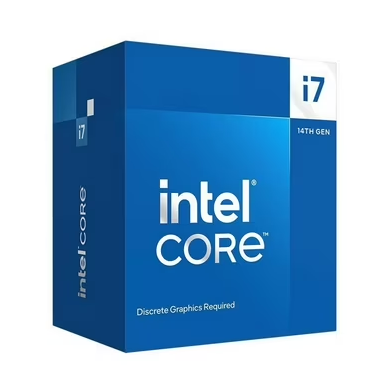
So the 9800X3D is not the "better CPU" outright — it is the better gaming CPU. If your machine spends its day exporting video or rendering and games at night, the 14700K does more work for less money here. For a build that has to do both well, the trade-offs are the same ones we weigh in best CPU for streaming and gaming in 2026.
Power, heat, and the stability history
The 9800X3D caps package power at 162W; the 14700K's Maximum Turbo Power is 253W. Under a heavy all-core load the Intel chip runs hot enough that a strong cooler is mandatory, not optional — we go through the specifics in does the i7-14700K need liquid cooling. The 9800X3D is the easier chip to cool, and a good air tower handles it, though it still rewards a 240mm-class AIO under sustained multi-core work.
There is also the history to acknowledge. Intel's 13th- and 14th-gen K processors, the 14700K included, had a documented instability problem. Intel traced it to elevated operating voltage and shipped microcode fixes delivered through motherboard BIOS updates. A 14700K bought today should arrive on fixed firmware, but if you build with one, update the board's BIOS before first boot — the step we cover in do you need to update BIOS for a new CPU.
Platform and price
The platform outlasts the chip, and the two go in different directions. The Ryzen 7 9800X3D uses Socket AM5, which AMD has committed to supporting with future CPU generations — you can drop a newer chip into the same board later. It is DDR5-only; pair it with a 32GB DDR5-6000 CL30 kit, because faster memory buys almost nothing on an X3D chip (see DDR5-6000 vs DDR5-8000 for the measurements).
The Core i7-14700K uses LGA1700, which is end-of-line — it is the last CPU generation for that socket, so a future chip upgrade means a new motherboard too.
On price, this matchup is the mirror image of the 14900K comparison. At TechCortex right now the 14700K is $456.82 and the 9800X3D is $568.12 — the Intel chip is about $111 cheaper. So you are paying a premium for the 9800X3D's gaming frames, not getting them for free. If multi-threaded work is your priority, the cheaper chip is also the faster one for that job. You can drop either into a compatibility-checked build in our PC Builder.
Who should buy which
- Buy the 9800X3D if gaming is the point of the machine, especially at 1080p or 1440p with a strong GPU. It is clearly faster in games, cooler, and sits on a socket with a future. You pay about $111 more here for that lead.
- Buy the 14700K if your workload is heavily multi-threaded — rendering, encoding, compiling — or you want strong mixed-use performance for less money. Its 28 threads do real work the eight-core AMD chip cannot match, and at TechCortex it is the cheaper chip. The cost is higher power draw, a dead-end socket, and leaving gaming frames on the table.
If you have the budget for the 14900K instead, the Ryzen 7 9800X3D vs Core i9-14900K breakdown shows how the value math flips when the Intel chip is the pricier option.