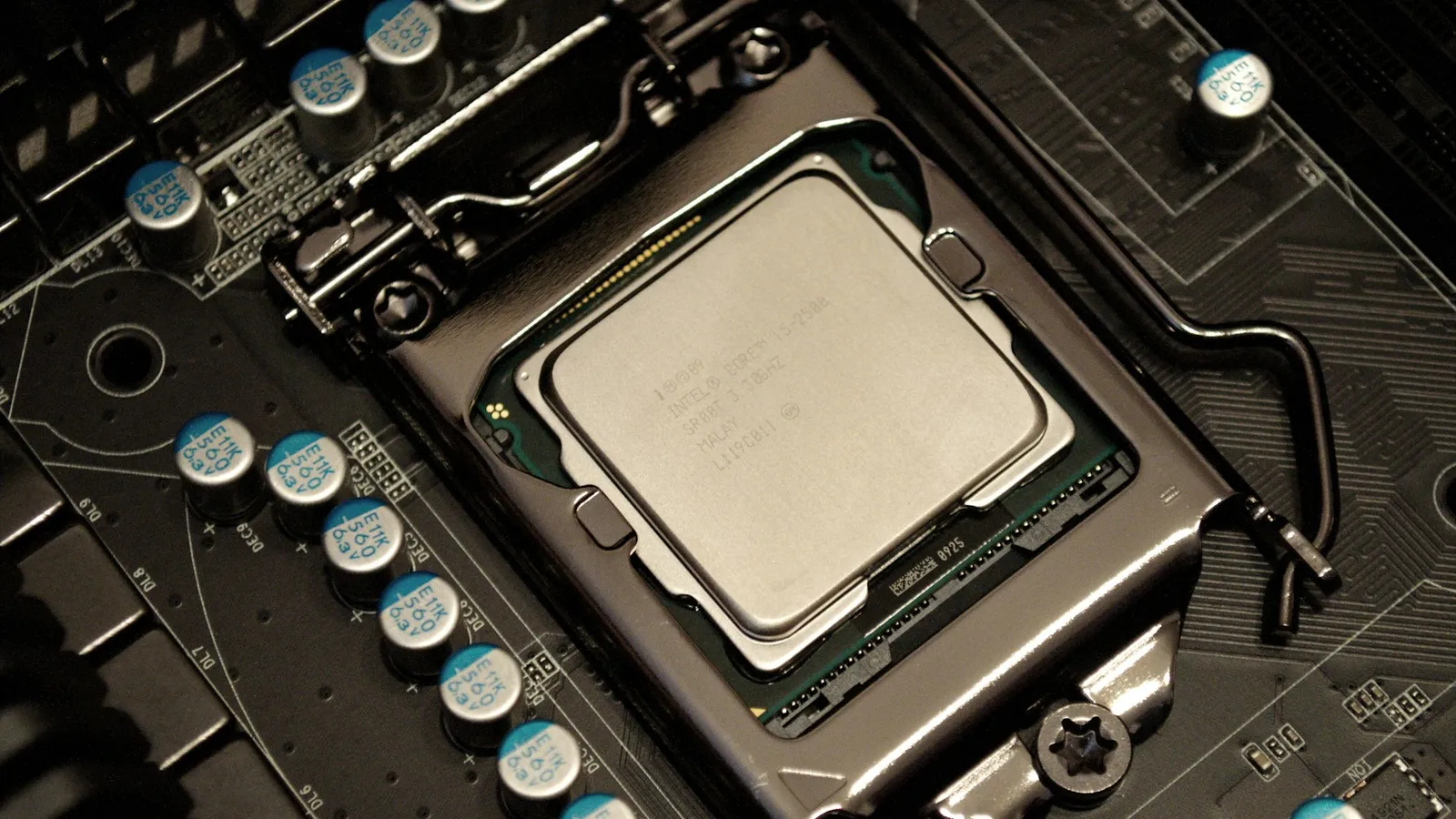

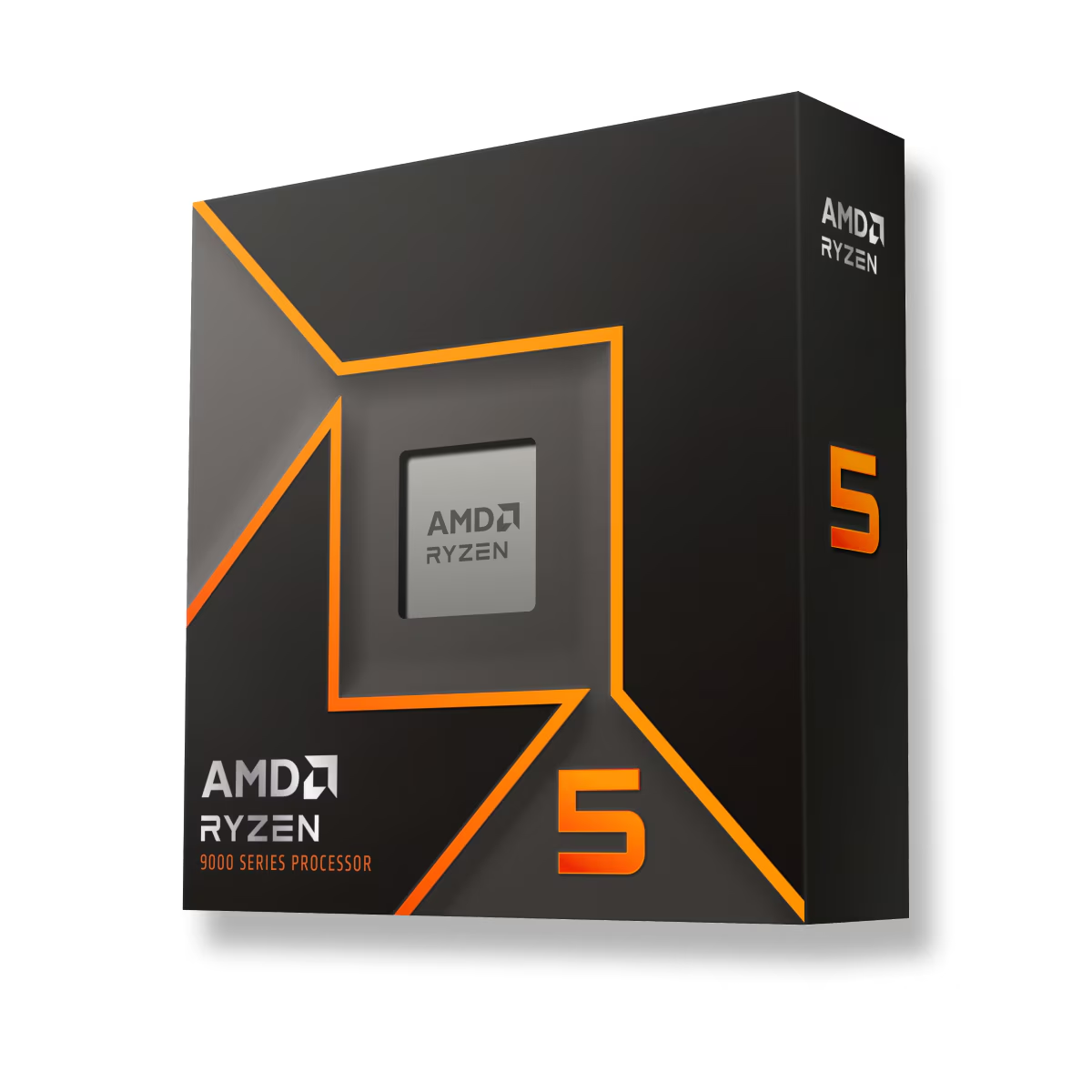
For gaming, buy the Ryzen 5 9600X ($225.40). It is the faster chip at 1080p, it runs cooler, and in our catalog it is actually $18 cheaper than the Core i5-14400F ($243.42). The 14400F wins in exactly one scenario: you already own DDR4 and want the cheapest possible platform, because it drops into a budget LGA1700 board and reuses DDR4 memory the 9600X cannot touch. Outside that case, the newer AMD chip is the better buy for a gaming build.
The matchup looks closer on a spec sheet than it is in games. The 14400F has more cores on paper — 10 to the 9600X's 6 — so it reads like the productivity pick. But those ten cores are six Performance cores plus four weaker Efficiency cores, while the 9600X's six Zen 5 cores are individually much stronger and clock far higher. That gap in per-core muscle is what decides frame rates, and it is why core count misleads here.
Gaming performance
Reviewers test CPUs at 1080p on the fastest available GPU for a reason: the low resolution lifts the graphics ceiling so the processor becomes the limiter and any real gap shows up. Under those conditions, Tom's Hardware found the $210 Ryzen 5 7600X runs 14% faster than the Core i5-14400 at 1080p — and the 14400 shares its silicon with the 14400F, so that result carries straight over (Tom's Hardware). The 9600X then sits a further 3–6% ahead of that same 7600X in a 12-game average (TechSpot). Put together, the 9600X leads the 14400F by roughly the mid-to-high teens in CPU-bound games.
Now the honest flip side. That lead is measured with an RTX 4090. Drop in the kind of GPU that actually pairs with a $225 CPU — something in the RTX 5060 to 5070 class — and raise the resolution to 1440p, and the graphics card runs out of headroom before either processor does. At that point the frame-rate difference between these two shrinks toward nothing, because the GPU is setting the pace, not the CPU. If you game at 1440p on a mid-range card, do not expect to feel the 9600X's lead. You are buying it for the platform and efficiency, not for frames you will see.
So the gaming verdict is conditional, and worth stating plainly: the 9600X is clearly faster where the CPU matters — high-refresh 1080p on a strong GPU — and roughly tied where it does not.
Cores, threads, and the productivity question
Here is where core count sets a trap. The 14400F has ten cores to the 9600X's six, which looks like a decisive productivity win. It is not. Zen 5 cores are far stronger per core than Intel's Efficiency cores, so the 9600X pulls clearly ahead in single-threaded work and lands close to the 14400F in heavy multi-threaded rendering despite the core deficit (Tom's Hardware, PCWorld).
| Ryzen 5 9600X | Core i5-14400F | |
|---|---|---|
| Cores / threads | 6 / 12 | 10 (6P + 4E) / 16 |
| Max boost | 5.4 GHz | 4.7 GHz |
| L3 cache | 32 MB | 20 MB |
| Base / max power | 65 W / ~88 W | 65 W / 148 W |
| Socket | AM5 | LGA1700 |
| Memory | DDR5-5600 | DDR5-4800 / DDR4-3200 |
| Integrated graphics | Radeon (2-core) | None |
| Unlocked | Yes | No |
| Price (our catalog) | $225.40 | $243.42 |
Specs are from AMD and Intel. The practical read: if your workload is light productivity on top of gaming — a browser stack, the occasional export — the two are close enough that it should not sway the decision. Neither of these is the chip you buy specifically for hours of rendering or streaming; that is a job for a Ryzen 7 or Core i7. Between these two, "more cores" does not translate into a real productivity advantage for the Intel part.
Platform, memory, and where the 14400F fights back
The 14400F's genuine advantage is the platform underneath it. It is an LGA1700 chip that supports DDR4-3200, so if you are reusing a DDR4 kit from an older build, you can pair it with an inexpensive B760 board and skip buying memory entirely (Intel). On a tight budget, that saved DDR5 kit can be the difference that matters. One tuning note: on DDR5, Tom's Hardware measured the 14400-class chip gaining about 14% from enabling an XMP profile over stock memory speeds, so do not leave fast memory running at JEDEC defaults (Tom's Hardware).
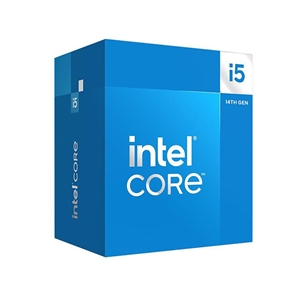
The 9600X answers with longevity instead of upfront savings. It requires AM5 and DDR5 — no DDR4 shortcut — but AM5 is a socket AMD has kept alive across multiple generations, so a future CPU upgrade can drop into the same board. LGA1700 is the opposite: the 14th generation is the last family it takes, so a 14400F build is a dead end if you later want more CPU. For a system you plan to keep and upgrade in stages, that upgrade path has real value; for a fixed build you will not touch again, it does not.
Two smaller differences round it out. The 9600X is unlocked and includes a basic Radeon integrated GPU, which means it can post and show a display with no graphics card installed — handy for troubleshooting. The "F" in 14400F means no integrated graphics at all, so it needs a discrete GPU just to boot to a screen (Intel). Whichever you choose, flash the latest BIOS before first boot; our guide on whether you need to update your BIOS for a new CPU covers when it is required.
Price and efficiency
In our catalog the pricing is unusual: the newer 9600X is $225.40, actually below the 14400F's $243.42. That erases the Intel chip's traditional "cheaper entry" argument on the CPU itself — the only place Intel claws back cost is the DDR4 platform, and only if you already own the memory. If you are buying a full kit either way, the 9600X is both cheaper and faster for gaming, which is not a combination you see often.
Efficiency goes AMD's way too. The 9600X runs at 65 W with a package limit around 88 W, and reviewers found it rarely approaches even that in games (PC Gamer). The 14400F is also a cool 65 W base chip, so neither needs an expensive cooler — a single-tower air cooler handles both.
One caveat on the 9600X worth saying out loud: its gen-on-gen gaming gain over the 7600X is small — single digits (TechSpot). If a Ryzen 5 7600X comes in cheaper than the 9600X where you shop, it delivers nearly the same gaming experience on the same AM5 platform. Buy the 9600X for the newer silicon and efficiency, not because it transforms frame rates over its predecessor.
Who should buy which
- Buy the Ryzen 5 9600X if you want the faster 1080p gaming chip, value efficiency, or plan to upgrade the CPU later on the same AM5 board. In our catalog it is also the cheaper of the two, which makes it the default pick for most new gaming builds.
- Buy the Core i5-14400F if you already own a DDR4 kit and a compatible LGA1700 board, or can buy one cheaply, and want the lowest total platform cost. The DDR4 route is its one decisive advantage.
- Skip both for a gaming-first build with room in the budget and step up to a Ryzen X3D chip instead — our best CPU for 1440p gaming guide explains where the extra money actually buys frames.
When the difference doesn't matter
At 1440p or 4K with a mid-range graphics card, the 9600X and 14400F deliver effectively the same frame rate, because the GPU is the limiter and neither CPU is holding it back. If that is your setup and you are not reusing DDR4, the decision comes down to platform and price — and both point to the 9600X here. The gaming gap only becomes something you feel at high-refresh 1080p on a fast GPU. You can spec either chip into a full, compatibility-checked system in our PC Builder.