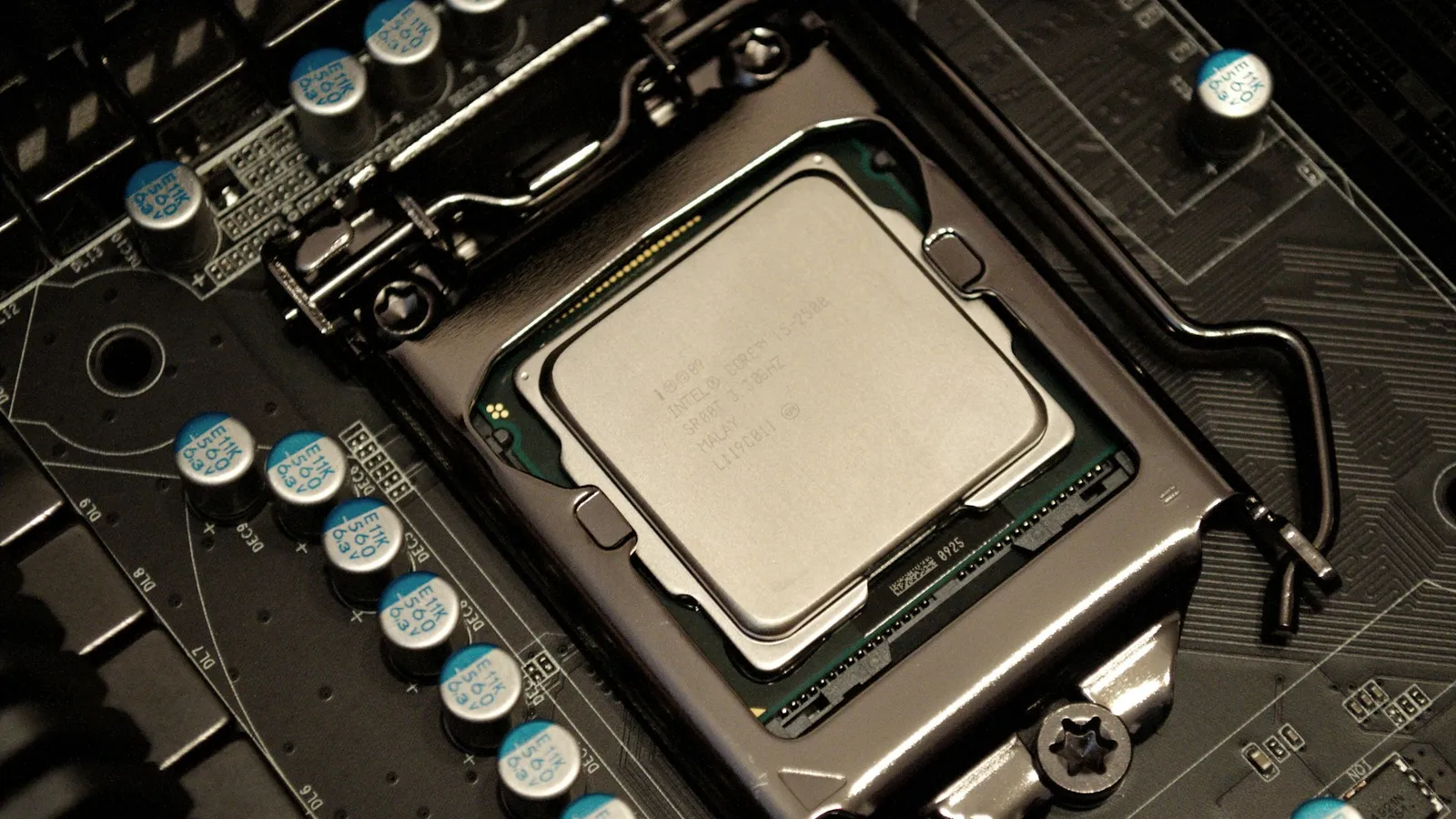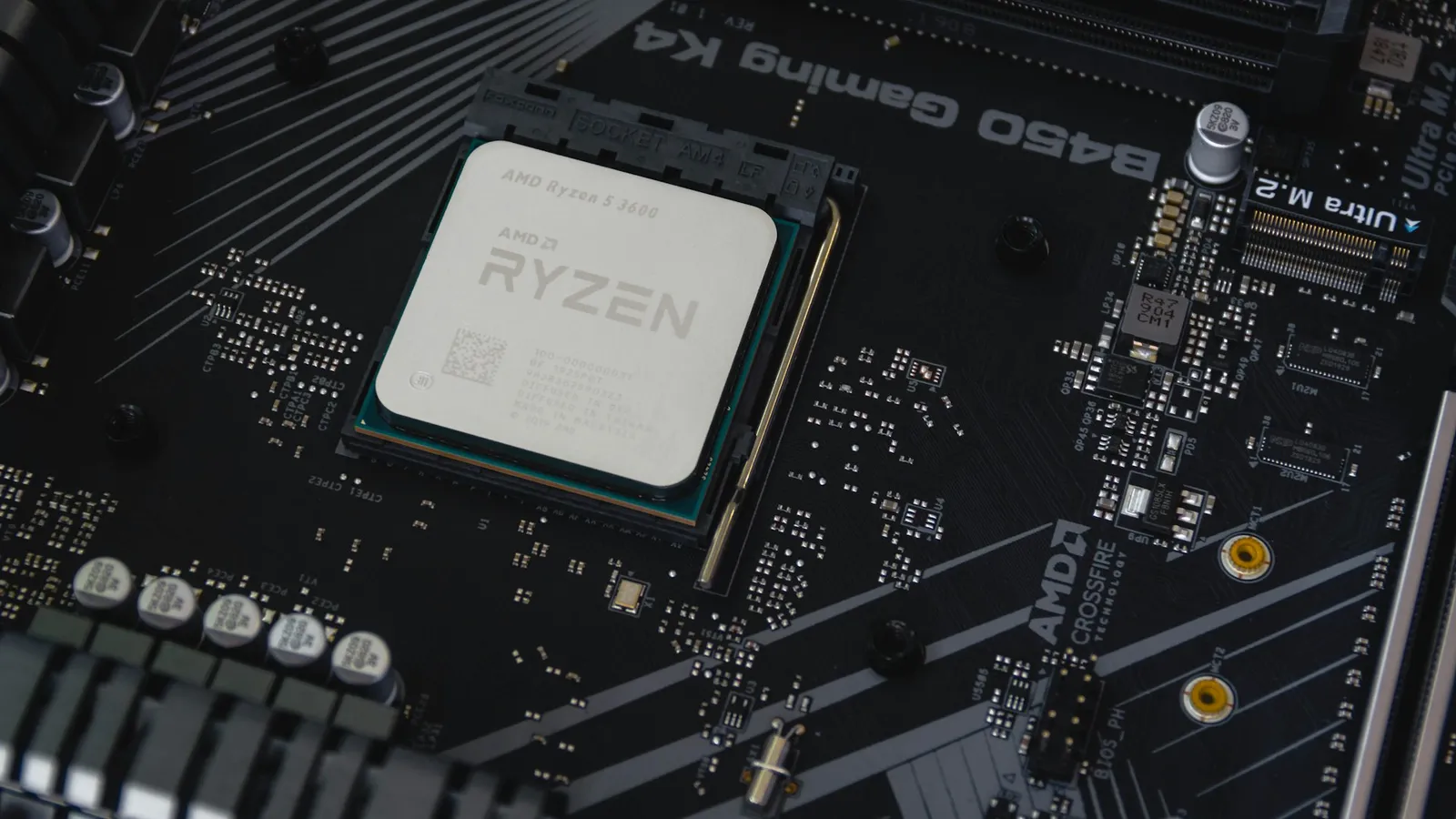

For a gaming-first build, the AMD Ryzen 5 9600X is the smarter buy over the Intel Core i5-14600K. At TechCortex it costs $144.58 less ($225.40 vs $369.98), runs far cooler, and drops into AM5 — a socket AMD keeps shipping new CPUs for. The 14600K is the faster chip in exactly two places: raw 1080p gaming, where TechPowerUp measured it about 4% ahead with an RTX 4090, and multi-core work, where its 14 cores bury the 9600X's six. Buy the 14600K only if you render, encode, or compile often enough to keep those extra threads busy.
These two land in the same shopping cart because both target the mainstream builder who wants strong gaming without flagship money — but they're built on opposite ideas. AMD gives you six full Zen 5 performance cores and a platform with a future. Intel gives you six performance cores plus eight efficiency cores for more total threads, on a socket it has already retired. Core-count spec sheets favor Intel. Frame rates, power meters, and upgrade paths tell a different story.
Gaming performance
For pure gaming, these two are close enough that the price and power gaps matter more than the frame counter. Across TechPowerUp's 1080p suite with an RTX 4090 — a deliberately CPU-limited setup that exaggerates the gap you'd ever see — the 14600K sat about 4% ahead of the stock 9600X. TechSpot saw a similar ~7% average lead for Intel across its game set, and noted the difference collapses once you move to 1440p.
The per-game picture is genuinely mixed, not a clean Intel sweep. In Club386's RTX 4090 testing, Cyberpunk 2077 ran about 6 fps faster on the 14600K at both 1080p and 1440p, while Mount & Blade II: Bannerlord went the other way — the 9600X led by 17 to 40 fps depending on resolution. Forza Motorsport landed within three frames, and Assassin's Creed Valhalla was neck-and-neck with the AMD chip holding slightly higher 1% lows.
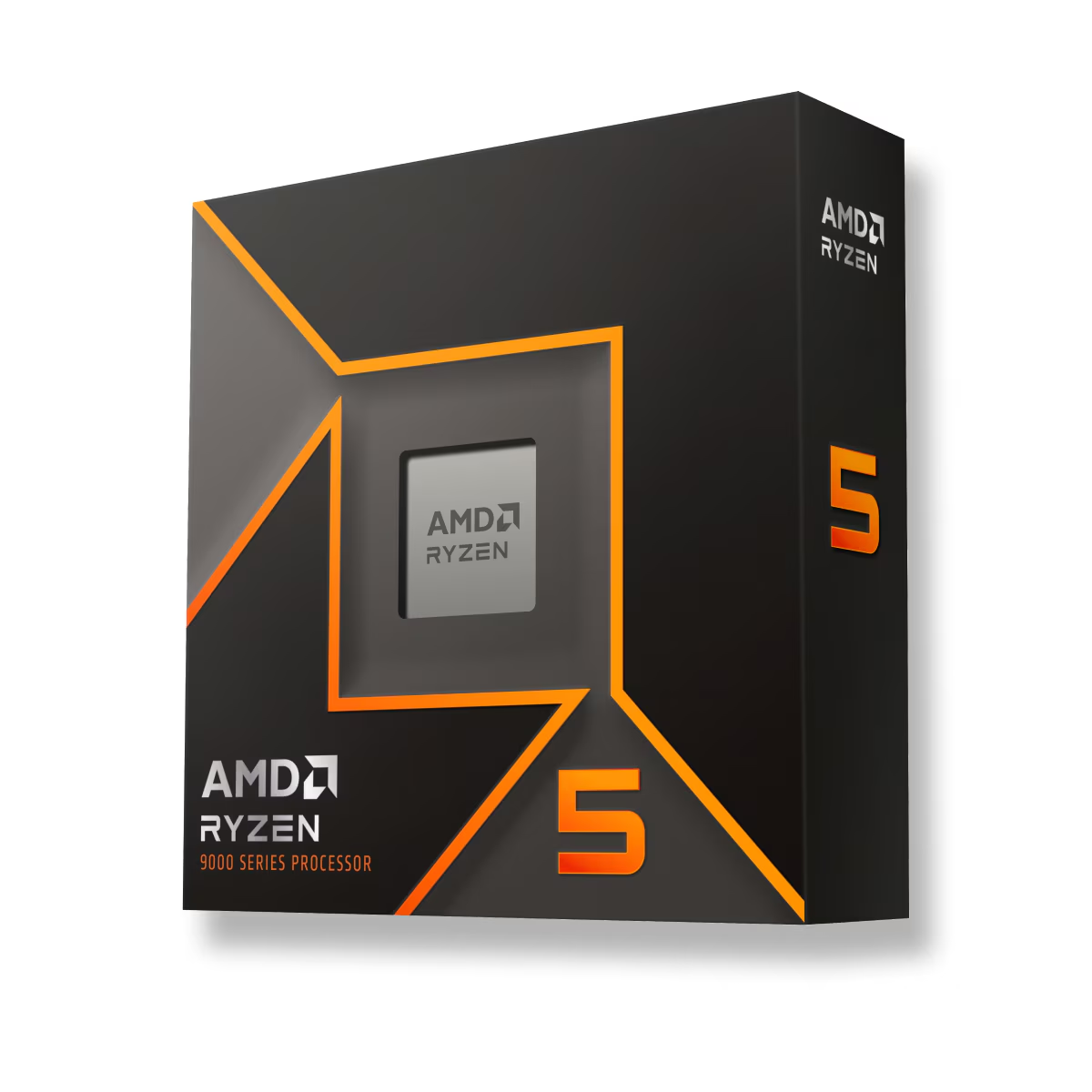
| Ryzen 5 9600X | Core i5-14600K | |
|---|---|---|
| Cores / threads | 6 / 12 | 14 (6P + 8E) / 20 |
| 1080p gaming (RTX 4090) | baseline | ~4% faster |
| Cinebench 2024 multi-core | 972 | 1,399 |
| Cinebench 2024 single-core | 130 | 122 |
| Full-load system power | 189 W | 260 W |
| Peak temperature | 61.2 °C | 84.0 °C |
| Socket | AM5 (active) | LGA1700 (retired) |
| TechCortex price | $225.40 | $369.98 |
The honest read: if you game at 1440p or 4K with a mainstream GPU — which is most people buying either of these — the two deliver the same frame rate, because the graphics card, not the CPU, is the limit. The 14600K's lead only shows up at 1080p on a very fast GPU, and even there it's single digits.
Multi-core and productivity
This is where the gap becomes real and the 14600K earns its price. Its 20 threads posted 1,399 in Cinebench 2024 multi-core against the 9600X's 972 (Club386) — roughly 44% more throughput. If you export video, run heavy Blender scenes, compile large projects, or stream with x264 while you play, the 14600K finishes noticeably sooner.
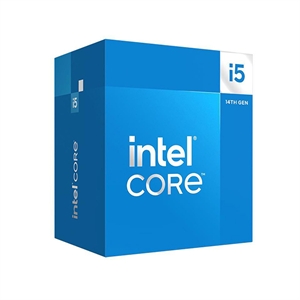
The 9600X answers with a small single-core lead (130 vs 122), which is why it stays competitive in games and snappy in everyday desktop use. But six cores is the honest ceiling here: for the heaviest all-core workloads, the 9600X is the wrong chip in this pair, and stepping up to a Ryzen 9 or a Core i7 makes more sense than agonizing over these two.
Power, heat, and the cooler you'll need
The 65W-class 9600X and the 125W-rated 14600K don't play in the same thermal league. On Club386's bench the AMD system pulled 189W at full load versus 260W for Intel — 27% less — and peaked at 61.2 °C against 84 °C. TechSpot measured the 9600X averaging around 60W in-game, roughly 30W under the 14600K.
That difference shows up on your parts list. The 9600X is happy under a modest tower air cooler. The 14600K wants a strong dual-tower air cooler or a 240mm+ liquid loop to hold clocks under sustained load, which quietly adds to its real cost. If you're weighing that choice, our air cooler vs AIO breakdown covers what each actually buys you.
Platform and upgrade path
The 9600X sits on AM5, which AMD has publicly committed to supporting through at least 2027, with Tom's Hardware reporting guidance stretching toward 2029. Drop in a 9600X now, and a future Ryzen upgrade is a BIOS update and a chip swap away.
The 14600K sits on LGA1700, and 14th Gen is the last CPU generation Intel released for that socket — Arrow Lake moved to LGA1851. Buy a 14600K and your motherboard is a dead end; the next Intel upgrade means a new board too. Either platform may need a BIOS update before a new CPU posts, so check our note on updating BIOS for a new CPU before you build.
Price at TechCortex
In our live catalog the Ryzen 5 9600X is $225.40 and the Core i5-14600K is $369.98 — a $144.58 gap, so the Intel chip costs about 64% more. That's a wider spread than the two carried at launch, and it reshapes the decision: you're paying a large premium for multi-core throughput and a slim 1080p gaming edge, while giving up efficiency and an upgrade path. For a build that mostly games, that math favors the 9600X hard.
Who should buy which
- Buy the Ryzen 5 9600X if your build is gaming-first, you're on a budget, you value low power and heat, or you want an AM5 board you can upgrade later. For most 1440p and 4K gamers, it's the better use of $145.
- Buy the Core i5-14600K if you regularly render, encode, compile, or stream with CPU encoding — the extra eight cores are worth real money there — and you're fine spending more on cooling and accepting a dead-end socket.
Not sure how either fits the rest of your parts? Build the whole system with compatibility checks in our PC Builder, and if you're picking a gaming chip more broadly, see our best CPU for 1440p gaming guide.