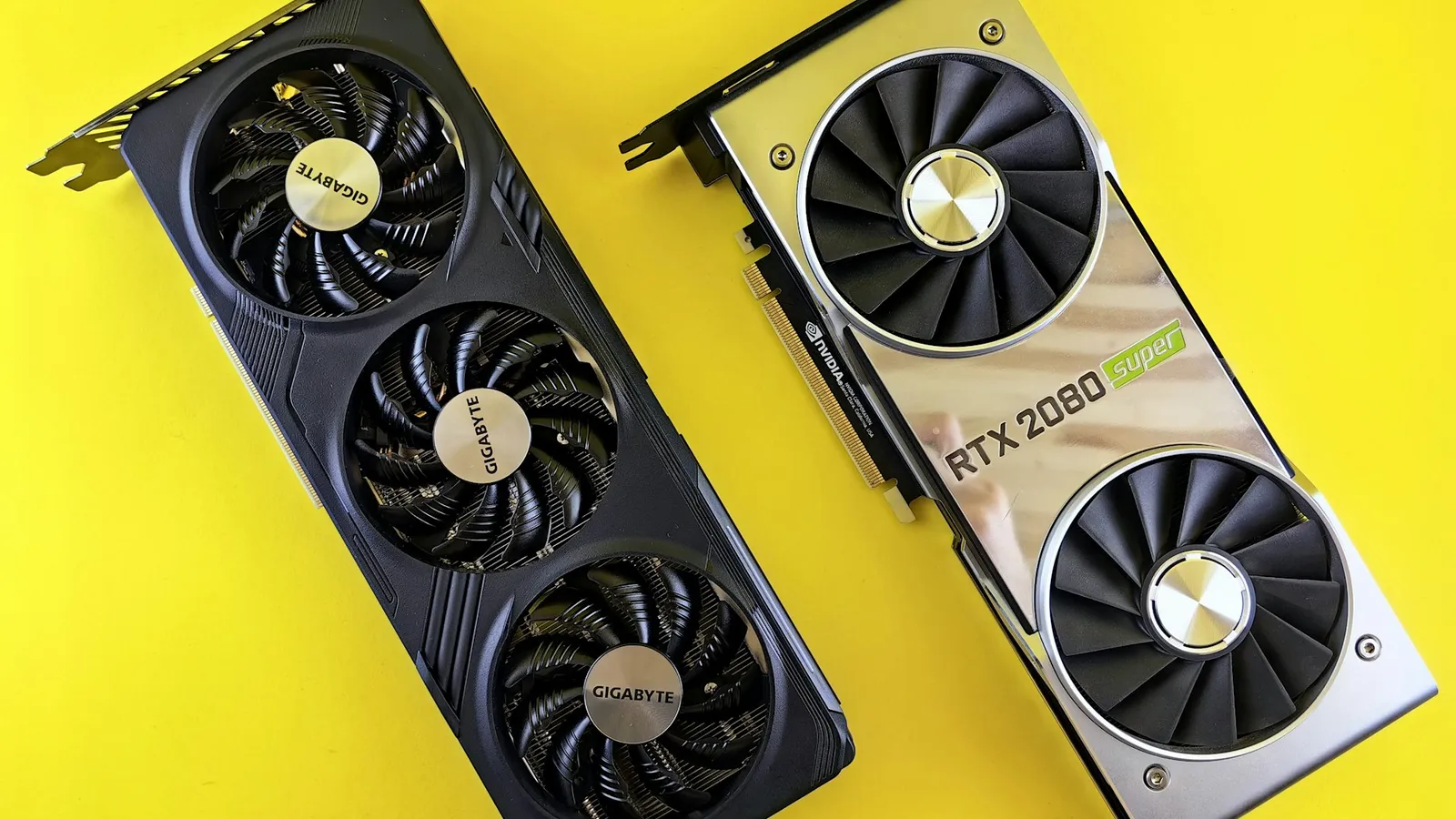

Buy the RTX 5060 only if you want DLSS 4 Multi Frame Generation or you already have the budget headroom: at 1080p it runs about 20-26% faster than the RTX 4060 in raster, but in our catalog it costs about $235 more ($639.81 vs $405.04), roughly 58% extra for a 20-26% frame bump. Both cards carry the same 8GB of VRAM, so the newer one buys you frames and a frame-generation feature, not more memory headroom. For most 1080p players on a tight budget, the RTX 4060 is still the stronger value here.
The question comes up because the names suggest a bigger jump than the benchmarks show. "5060" sounds like a clean generation ahead of "4060," and NVIDIA markets the 5060 around DLSS 4. The raw rasterization gain is real but modest, and the one spec that limits both cards in the newest games — 8GB of VRAM — did not change at all.
1080p gaming performance
This is where the cards split, and at 1080p the gap is smaller than the model numbers imply. The figures below are 1080p average fps from TechSpot's RTX 5060 review, measured in raster (no ray tracing) on their test bench. Both cards were tested in the same games at the same settings.
| Game (1080p, raster) | RTX 5060 avg | Lead over RTX 4060 |
|---|---|---|
| Cyberpunk 2077: Phantom Liberty | ~100 fps | +28% |
| Space Marine 2 | ~100 fps | +23% |
| Clair Obscur: Expedition 33 | ~48 fps | +17% |
TechPowerUp's aggregate across a larger game set lands at about 26% faster overall, and other outlets report anywhere from 19% to 29% depending on the test suite. The gap is widest in lighter, GPU-bound engines and narrowest in heavy titles where both cards are already working hard — Clair Obscur: Expedition 33 at 48 fps is the kind of game where a 17% lead still leaves you reaching for upscaling on either card.
The specs behind the gap
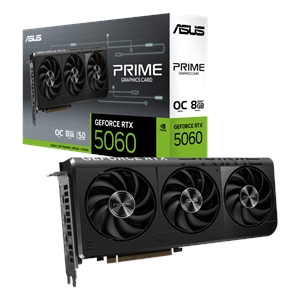
The 5060 is a real generational step on paper — more shaders, faster memory, a newer architecture. The one number that matters most for longevity, though, is the one that stayed the same.
| RTX 4060 | RTX 5060 | |
|---|---|---|
| Architecture | Ada Lovelace | Blackwell |
| CUDA cores | 3,072 | 3,840 |
| Memory | 8GB GDDR6 | 8GB GDDR7 |
| Memory bus | 128-bit | 128-bit |
| Memory bandwidth | ~272 GB/s | 448 GB/s |
| Total graphics power | 115W | 145W |
| Interface | PCIe 4.0 x8 | PCIe 5.0 x8 |
The 5060 has about 25% more CUDA cores and a large bandwidth jump from GDDR7, which tracks with the 20-26% raster lead. The newer card also moves to a PCIe 5.0 x8 interface, but since both are x8 cards, that only matters if you run one in an older PCIe 3.0 slot, where the narrow x8 link can cost a few percent. On any modern board it's a non-issue.
Where the gap disappears: 8GB VRAM
Both cards ship with 8GB, and that is the real ceiling at 1080p in 2026. In the latest titles with high-resolution texture packs, 8GB fills up, and when it does the card streams textures off system RAM — which shows up as stutter and ugly 1% lows rather than a lower average. The 5060's faster GDDR7 moves data quicker, but it cannot store more of it. In VRAM-bound scenes both cards hit the same wall, and the 5060's lead shrinks toward zero.
That is the honest limit of this upgrade: you are paying for frames, not for headroom. If you plan to keep the card for several years and play the newest AAA releases with maxed textures, neither 8GB card is the one to bet on — a 16GB card like the RTX 5060 Ti is the step that actually buys you memory. If you want the full picture on capacity before you choose a tier, read how much VRAM you need for gaming.
DLSS 4 Multi Frame Generation: the real 50-series difference
The clearest reason to pick the 5060 isn't raster — it's DLSS 4 Multi Frame Generation, which is exclusive to the RTX 50 series. It uses the Blackwell Tensor cores to insert up to three AI-generated frames between rendered ones, which can multiply the displayed frame rate in supported games. The RTX 4060 supports DLSS 3, which generates a single frame.
Be realistic about what that buys you. Frame generation smooths motion, but it works from a solid base frame rate and adds a little input latency, so it makes a 70 fps game look like 200 fps rather than turning a 25 fps game into a playable one. It also doesn't fix a VRAM-starved 1% low. Treat it as a reason to buy the 5060 if you specifically value high-refresh smoothness in single-player games — not as a blanket "the 5060 is 3x faster" claim.
Price and power in our catalog
In our catalog the RTX 4060 8GB is $405.04 and the RTX 5060 8GB is $639.81 — a $235 step up, about 58% more. Weighed against a 20-26% raster gain and identical VRAM, the 4060 is the better value per frame for a straightforward 1080p build. The 5060 earns its premium mainly if Multi Frame Generation is on your must-have list.
Power is close enough that it rarely changes the math. The 5060 draws 30W more (145W vs 115W), but NVIDIA recommends the same 550W system power supply for both, so an existing 550-650W build usually takes either card without a PSU change. Drop either GPU into our PC Builder to confirm PSU headroom and case clearance before you commit.

Who should buy which
- Buy the RTX 4060 if you game at 1080p on a budget and want the most frames per dollar. It trails the 5060 by only 20-26% in raster, shares the same 8GB VRAM, and saves you about $235 — money better spent on a faster CPU, more system RAM, or a higher-refresh monitor.
- Buy the RTX 5060 if you want DLSS 4 Multi Frame Generation for high-refresh single-player gaming, or the ~58% price gap doesn't strain your build. You get a genuine 20-26% raster bump and faster GDDR7, just don't expect it to solve the shared 8GB limit.
Still weighing which GPU fits a 1080p budget overall? Our best budget GPU for 1080p gaming in 2026 rundown puts both of these in context.