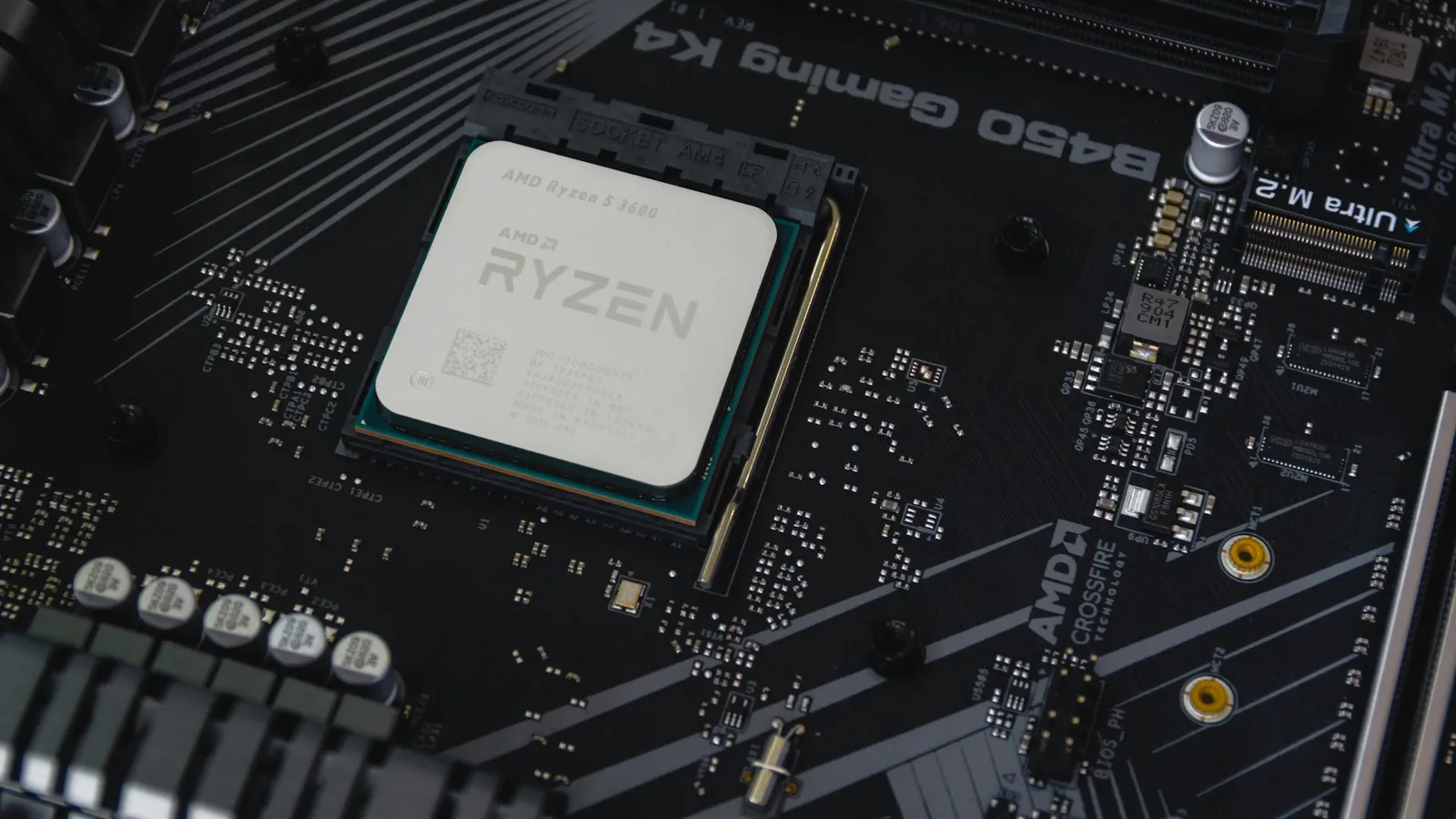

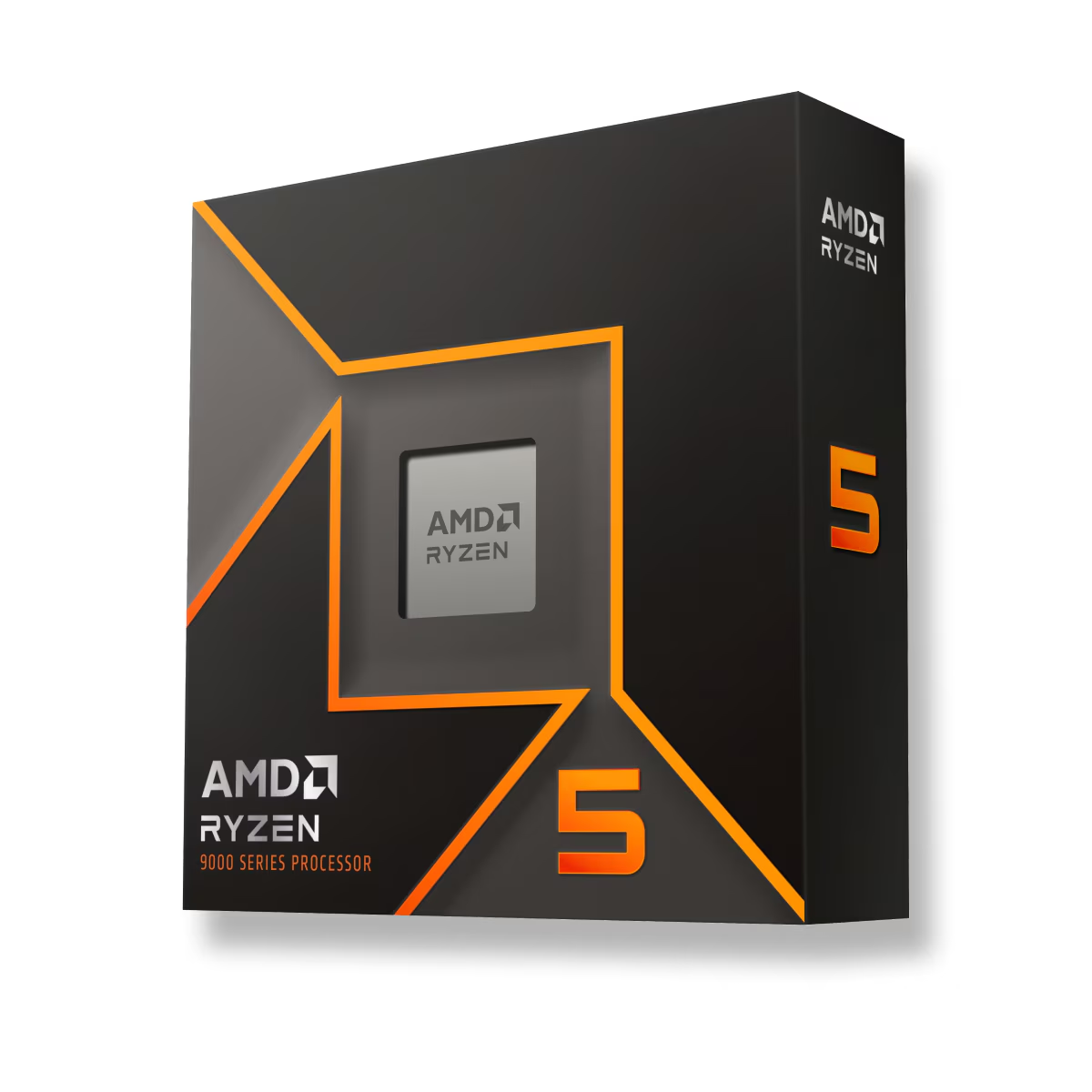
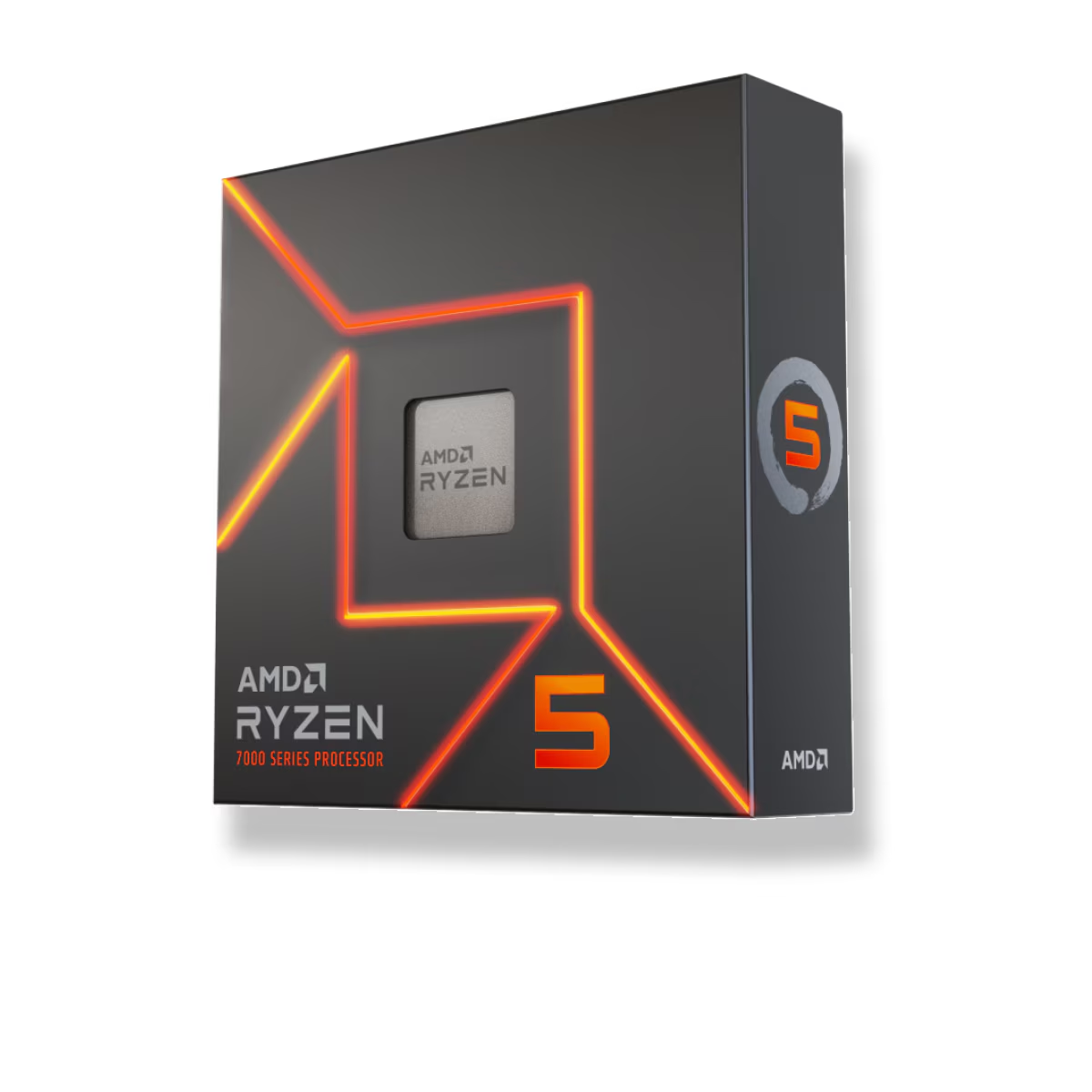
For pure gaming, the Ryzen 5 7600X and Ryzen 5 9600X are close enough that the price gap between them barely matters. At TechCortex the 7600X is $203.27 and the 9600X is $215.00 — both are six-core, twelve-thread AM5 chips that run the same DDR5 and drop into the same boards. The Zen 5 9600X does win, but the win is small at the resolutions most people actually play, and it comes mostly from efficiency and lower temperatures, not from a big frame-rate jump. Buy the 9600X if you want the cooler, newer, more power-efficient chip; buy the 7600X if you'd rather send the savings toward a faster GPU.
The question exists because AMD sold Zen 5 on a large IPC (instructions-per-clock) increase, and in the right productivity workloads it delivers. But "IPC in the right benchmark" and "frames in the game you play at 1440p" are different numbers, and the launch reviews made that gap obvious.
Gaming performance: the gap shrinks where you play
On synthetic aggregates the Zen 5 chip looks convincingly ahead. HowManyFPS, which averages results across more than 100 titles, puts the 9600X about 13% in front of the 7600X. That number is real, but it flatters the 9600X: aggregate suites lean on CPU-bound test scenes and low settings that expose the processor.
Hands-on reviews in actual games tell a calmer story. TechSpot's 9600X vs 7600X gaming test found the generational gain in the low single digits at playable settings, with several titles landing inside run-to-run margin of error. Push settings up or move to 1440p and the difference all but disappears, because the GPU becomes the limit long before either six-core CPU runs out of headroom.
There's also a wrinkle both chips share. A Windows 11 branch-prediction optimization — shipped in 24H2 and backported to 23H2 as KB5041587 — lifted Ryzen gaming performance, with AMD citing 3–13% on Zen 5. It's easy to read that as a 9600X-only boost, but the same update helps Zen 4, so a patched 7600X moves up too. It narrowed the launch-day gap rather than widening it.
| Ryzen 5 7600X | Ryzen 5 9600X | |
|---|---|---|
| Architecture | Zen 4 | Zen 5 |
| Cores / threads | 6 / 12 | 6 / 12 |
| Max boost clock | 5.3 GHz | 5.4 GHz |
| Default TDP | 105 W | 65 W |
| Price (TechCortex) | $203.27 | $215.00 |
Efficiency and heat: where Zen 5 clearly wins
This is the honest reason to pick the 9600X. AMD ships it with a 65W default TDP against the 7600X's 105W, and independent testing backs the label up with roughly 10% lower package power under gaming and mixed loads (TechSpot). Lower power means lower temperatures and less fan noise from the same cooler.
The practical payoff: the Ryzen 5 9600X runs comfortably on a modest air cooler and stays quiet in a small case. The Ryzen 5 7600X is a hotter-running part at stock — it will hit its thermal limit and hold clocks there, which is by design, but it wants a competent cooler to do it quietly. Neither ships with a boxed cooler, so budget for one on both.
Platform and longevity
Both are Socket AM5 and use DDR5, so the board and memory decision is identical. A mid-range B650 board like the ASRock B650 PRO RS ($206.99) runs either chip without fuss, and for gaming the sweet-spot memory is DDR5-6000 CL30 rather than anything faster — we cover why in DDR5-6000 vs DDR5-8000.
The 9600X's one structural advantage here is generational recency: it's the newer silicon on a socket AMD has committed to supporting for years, so it sits closer to the front of the AM5 lifecycle. That matters more for resale and "I'll upgrade later" plans than for how either chip games today.
Price and value
At TechCortex the gap is about $12 — small enough that price alone won't decide it. That's the trap in this matchup: because the 9600X costs only a little more, it's tempting to treat it as a free upgrade. It isn't quite free, because you're paying for efficiency and newness, not frame rate.
If frame rate is what you're chasing, the better value lever isn't 9600X-over-7600X — it's cache. A Ryzen 7 7800X3D ($409.99) with its stacked L3 pulls clearly ahead of both six-core chips in CPU-bound gaming, which is why we single it out in our 1440p gaming CPU guide and in 7800X3D vs 7700X. Spending the 9600X premium is fine; spending it and stopping there, when a bigger gaming jump exists one tier up, is the mistake.
Who should buy which
- Buy the Ryzen 5 9600X if you want the cooler, quieter, more power-efficient chip, you value being on the newest generation of the AM5 platform, and the ~$12 difference is noise to you.
- Buy the Ryzen 5 7600X if you're building to a strict budget and would rather route every saved dollar into a stronger GPU — the component that actually decides your frame rate at 1080p and above.
- Skip both and get a 7800X3D if gaming FPS is your only priority and your budget can stretch to it; the 3D V-Cache jump dwarfs the difference between these two.
Building the whole system? Drop either CPU into a compatibility-checked build in our PC Builder and it will flag the board, cooler, and PSU that fit.