
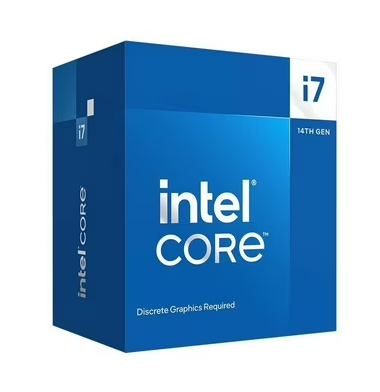
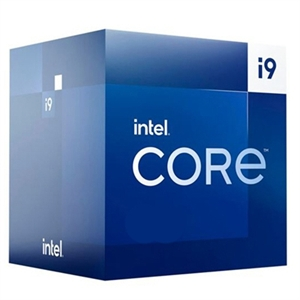
For gaming, the Core i7-14700K ($448.97) is the one to buy. It lands within 3-6% of the pricier Core i9-14900K ($614.11) in games — usually a difference of a few frames — while costing about $165 less (PCWorld). The i9 only earns its premium in sustained multi-threaded work like rendering and video export, where its four extra E-cores push it roughly 14% ahead.
That gap between the badge and the benchmark is why this question keeps coming up. The i9 wears the flagship name and a 6.0 GHz boost number, so it looks like the obvious gaming pick. But games lean on a handful of fast cores and cache, not on raw core count — and both chips share the same eight Performance cores. The i9's advantage lives almost entirely in the extra E-cores and clock speed that most games barely touch.
The core difference between them
Both chips are Raptor Lake Refresh on the same LGA1700 socket, and both use the same eight Performance cores — the cores games actually run on. What separates them is the count of Efficiency cores, the top boost clock, and 3 MB of L3 cache.
| Core i7-14700K | Core i9-14900K | |
|---|---|---|
| Cores / threads | 20 (8P + 12E) / 28 | 24 (8P + 16E) / 32 |
| Max turbo | 5.6 GHz | 6.0 GHz |
| L3 cache | 33 MB | 36 MB |
| Cinebench R23 multi | ≈33,980 | ≈38,850 (~14% more) |
| Gaming vs the other | baseline | ~3-6% faster (often a few fps) |
| Price (our catalog) | $448.97 | $614.11 |
The E-cores handle background threads and heavily parallel workloads. They do not run your game's main thread, which is why four more of them barely moves a frame counter.
Gaming performance
In PCWorld's testing the 14700K posted numbers within 3 to 6 percent of the 14900K, and in most individual games the spread was just under 1 percent to 2.6 percent — the kind of difference you measure with a tool, not one you feel while playing (PCWorld). Reviewers run these tests at 1080p on a top-end GPU on purpose: the low resolution lifts the GPU ceiling and exposes whatever gap exists between the processors. That gap is already small here.
Raise the resolution and the two chips converge. At 1440p and 4K the graphics card becomes the limiter in most modern games, so the frame rate is decided by the GPU long before the CPU runs out of headroom. If you game at 1440p — as most buyers of a card in this class do — the practical difference between these two processors rounds to zero.
Multi-threaded work is where the i9 justifies itself
This is the one place the extra money shows up. In a fully threaded render like Cinebench R23, the 14900K's four additional E-cores and higher clocks put it about 14% ahead of the 14700K (≈38,850 vs ≈33,980 points), and Blender-class workloads scale the same way (cpu-monkey).
But that lead is specific to workloads that saturate every core. In lighter creative apps the gap collapses — PCWorld measured only a 2.8% Photoshop uplift for the i9 over the i7 (PCWorld). So the honest rule is narrow: the 14900K pays off if you spend real hours in Blender, DaVinci Resolve exports, code compiles, or heavy multitasking. If your "productivity" is browser tabs and Photoshop, you are paying for cores that sit idle.
Power, heat, and the history you should check before buying
Neither of these is a cool, quiet chip. The 14900K drew 424 W at the wall in an all-core load in PCWorld's testing, and the 14700K sits below it but is still demanding — both want a 240mm-or-larger AIO or a high-end air cooler to hold boost clocks without throttling. Factor the cooler into the price when you compare them.
There is also a history worth knowing. Intel's 13th- and 14th-gen desktop chips suffered a "Vmin shift" instability that could degrade the processor over time by requesting too much voltage at idle and light load. Intel's 0x12B microcode, released in September 2024, is the final mitigation and rolls up the earlier 0x125 and 0x129 fixes; it does not repair a chip that already degraded, which is an RMA case (The Register). The practical takeaway: buy from a source with current stock, and make sure your motherboard's BIOS is on 0x12B or later before you load the chip — see our guide on updating your BIOS for a new CPU.
Price and what the extra $165 buys
In our catalog the 14700K is $448.97 and the 14900K is $614.11 — a $165 gap. On a gaming build, $165 moved from the CPU to the GPU is worth far more frames than the 14900K's E-cores will ever deliver, because the GPU is what sets your frame rate at 1440p and 4K. The only build where that $165 comes back to you is one that renders or compiles for hours at a time.
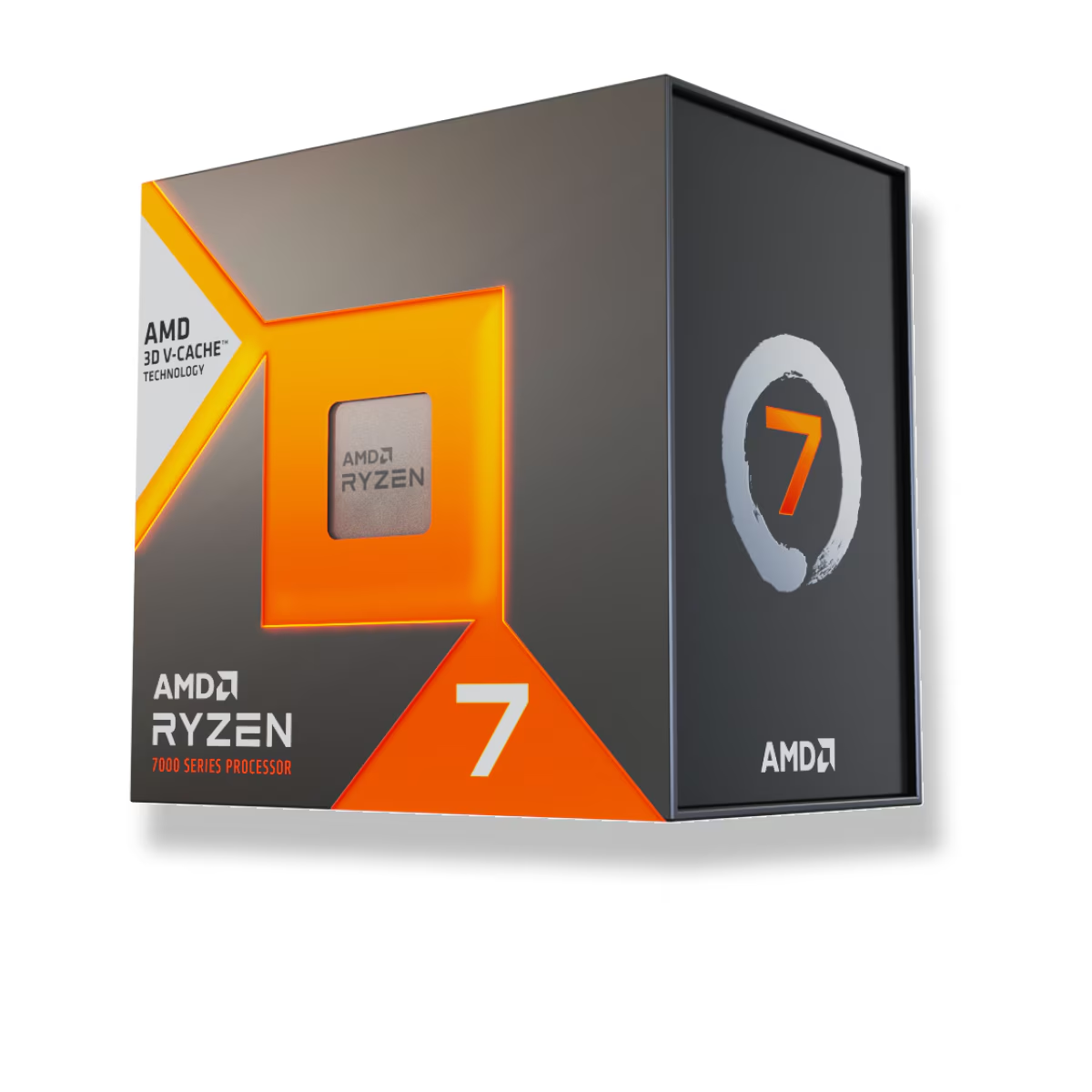
And if the build is purely for gaming, the more useful comparison is not i7 versus i9 at all. The Ryzen 7 7800X3D ($409.99) is cheaper than both, faster in games thanks to its stacked 3D V-Cache, and draws a fraction of the power (TechSpot). We walk through that decision in Ryzen 7 7800X3D vs Core i9-14900K and in Best CPU for 1440p gaming. Whichever platform you pick, you can spec the whole system with compatibility checked automatically in our PC Builder.
Who should buy which
- Buy the Core i7-14700K if you are mainly gaming, or gaming plus moderate multitasking. You get within a few frames of the i9 and keep $165 for the GPU.
- Buy the Core i9-14900K if you regularly run all-core workloads — 3D rendering, video exports, large compiles — where a consistent ~14% edge and four extra E-cores actually cash out.
- Look past both if the machine is gaming-only. The Ryzen 7 7800X3D is faster in games, cheaper, and far cooler than either Intel chip.
When the difference doesn't matter
At 1440p or 4K with a mid-to-high-end GPU, most games are GPU-bound, so the i7 and i9 produce effectively the same frame rate — the choice between them stops mattering for gaming and becomes purely about whether you also do heavy multi-threaded work. Buy the i9 for that work, not for frames.