
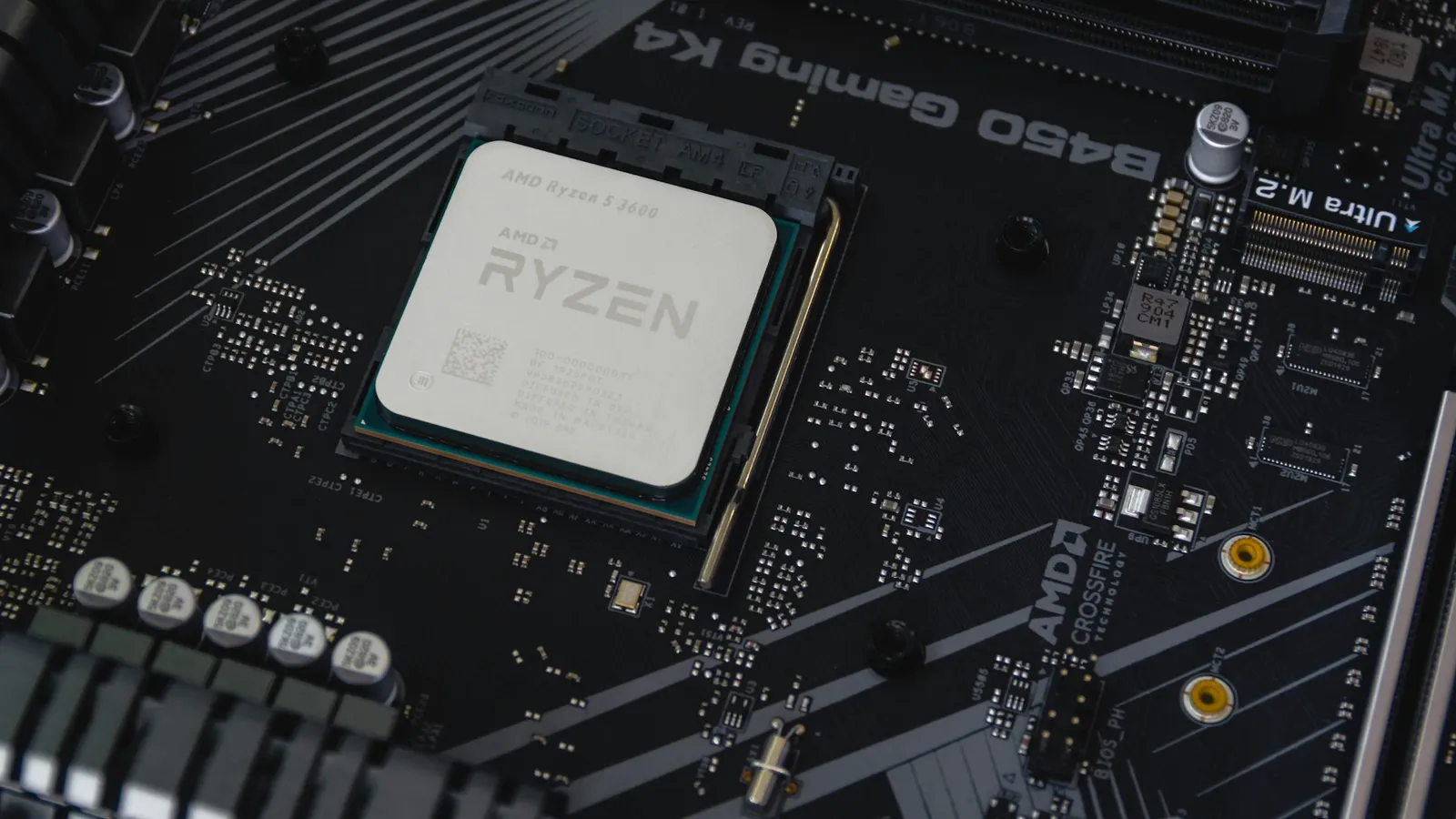
For gaming, the Ryzen 5 9600X and Ryzen 7 7700X are close enough to call a tie. Across a large test suite on an RTX 4090 they land within a couple of percent of each other at 1080p, and the gap shrinks to nothing at 1440p and 4K. The real split is everything that isn't a game: the 7700X has eight cores to the 9600X's six, so it pulls clearly ahead in rendering, video encoding, and streaming while you play. Buy the 9600X if you mostly game and want the cooler, quieter, cheaper chip. Buy the 7700X if your PC also does real multi-core work.
The question exists because it looks lopsided on paper. The 9600X is the newer Zen 5 part; the 7700X is last-gen Zen 4, so the 9600X "should" win. It doesn't. Zen 5's per-core gains are real but modest, and games rarely load more than six to eight threads — so a newer six-core chip and an older eight-core chip end up in the same place on a frame counter.
Gaming performance: effectively a tie
The cleanest proof that cores don't decide games comes from AMD's own lineup. In TechPowerUp's suite (RTX 4090, DDR5-6000), the six-core 9600X sits within about 2% of the eight-core 9700X at 720p — the resolution built to expose CPU limits — and matches it at 1440p and 4K. Two more cores of the same architecture change nothing on a frame counter.
Against the 7700X specifically, TechSpot's 1080p RTX 4090 runs put the 9600X on par with the older chip, and a hair behind it in a few titles. The 9600X's Zen 5 cores are about 3.4% faster than its own predecessor, the 7600X, at 1080p (TechPowerUp) — a real but small generational step that the 7700X roughly matches with clock speed and cache. Move to 1440p or 4K and the GPU becomes the ceiling; both chips push identical frame rates.
The honest read: if a listing sells the 9600X as "newer and faster," that's true on a spec sheet and irrelevant on a 1440p gaming monitor. For more on how little the generational jump moves games, see our 7600X vs 9600X comparison.
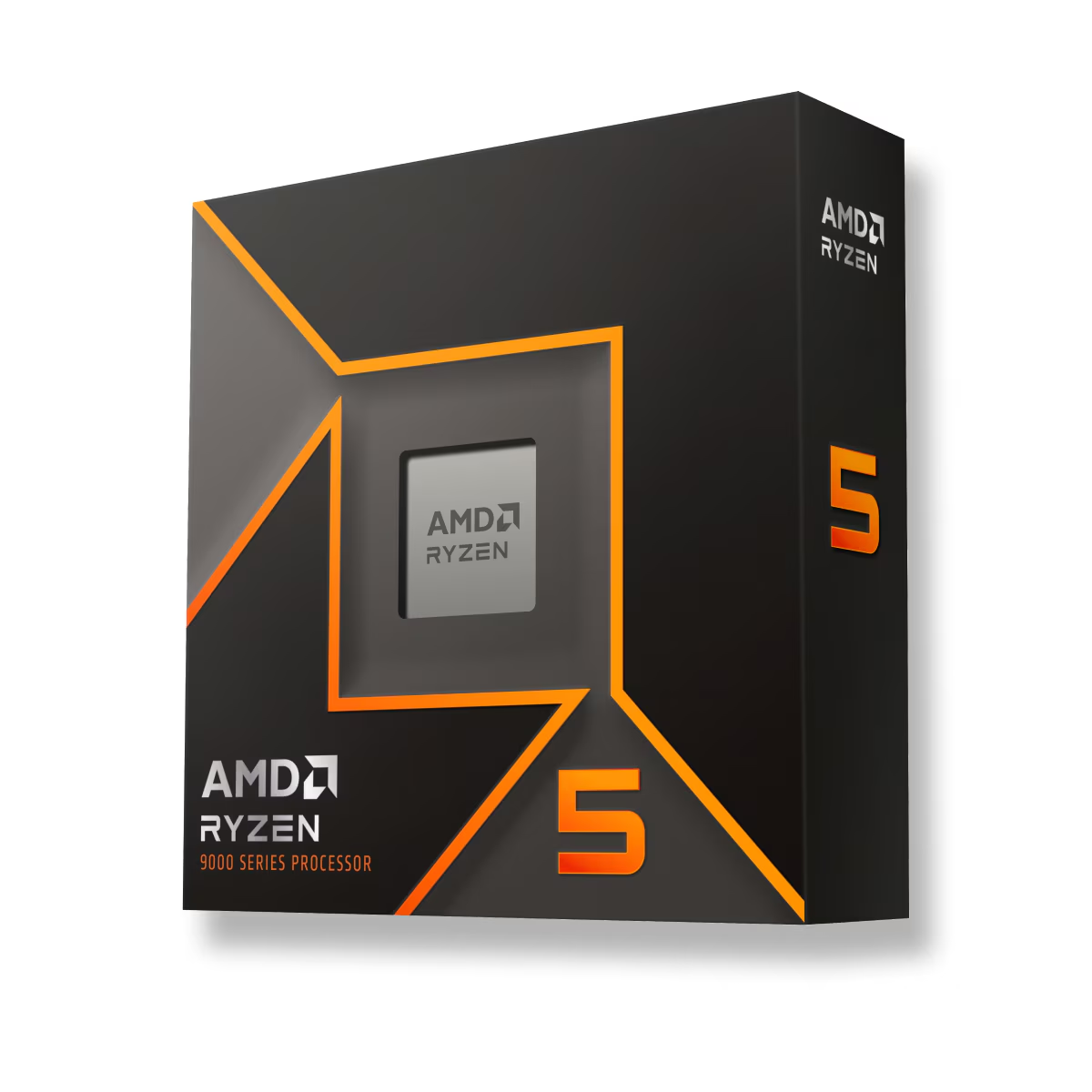
| Ryzen 5 9600X | Ryzen 7 7700X | |
|---|---|---|
| Architecture | Zen 5 (4 nm) | Zen 4 (5 nm) |
| Cores / threads | 6 / 12 | 8 / 16 |
| Base / boost clock | 3.9 / 5.4 GHz | 4.5 / 5.4 GHz |
| L2 + L3 cache | 6 MB + 32 MB | 8 MB + 32 MB |
| Default TDP | 65 W | 105 W |
| Socket / memory | AM5 / DDR5 | AM5 / DDR5 |
| Our price | $215 | $279.99 |
Specs from AMD product pages.
Where the 7700X pulls ahead: multi-core work
The eight-core 7700X is meaningfully faster whenever software uses every core at once — Blender renders, x265 video encodes, large code compiles, and streaming to Twitch or YouTube with the x264 encoder while you game. Reviewers measure roughly 25–30% more multi-threaded throughput for the 7700X, which is exactly what two more physical cores buy (Tom's Hardware).
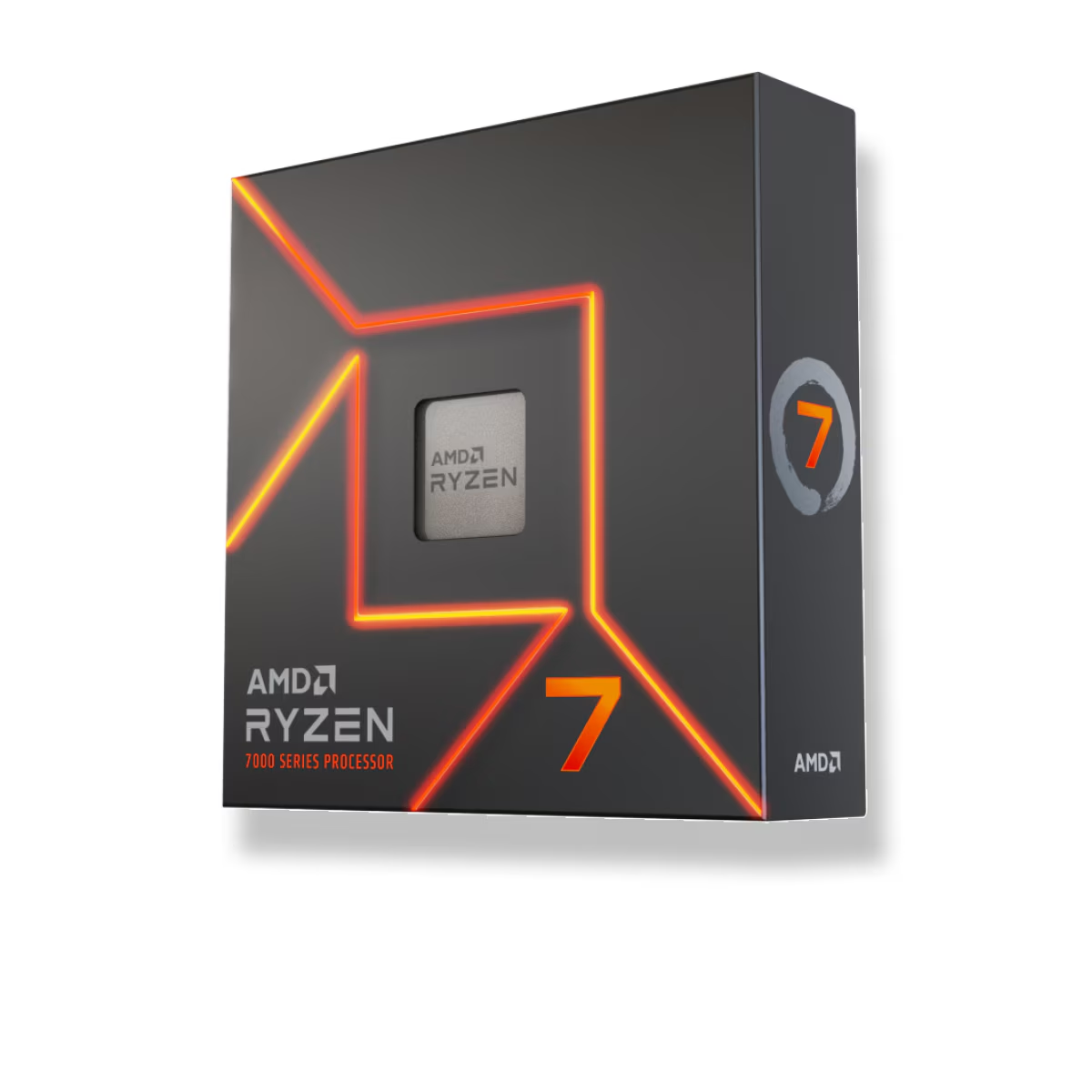
The honest negative for the 9600X: six cores is plenty today, but it's the floor. A gaming-only machine will never feel it. A machine that also edits video, renders, or streams with CPU encoding will — and there the $65 you saved turns into slower exports and dropped stream frames.
Efficiency and heat
This is where the newer chip earns its keep. The 9600X runs at a 65 W default TDP and peaks around 66–68°C in gaming on a modest cooler, pulling far less at the wall (PCGamesN). The 7700X's 105 W TDP is tuned to sit near its 95°C limit by design — normal AMD behavior, not a defect, but it makes more heat and more fan noise and wants a beefier cooler. Zen 5 is also about 7% more power-efficient than Zen 4 at the same wattage (TechSpot). For a small-form-factor or noise-sensitive build, the 9600X is simply the easier chip to live with.
Price and platform
Both are Socket AM5 and run DDR5, so the platform around them is identical — the same B650, B850, and X670 boards, the same memory, and the same upgrade path to future AM5 CPUs. In our catalog the Ryzen 5 9600X is $215 and the Ryzen 7 7700X is $279.99. You can drop either into the same build in our PC Builder, which checks socket and memory compatibility as you go.
Who should buy which
- Buy the 9600X if you mostly game, want the coolest and quietest AM5 chip, or are building small-form-factor. In games you give up almost nothing, and you save about $65.
- Buy the 7700X if you stream while gaming, edit video, render, or compile. Two extra cores are worth $65 for real multi-core work — and pointless money if you never do it.
- Buy neither if your single goal is the highest possible frame rate: the Ryzen 7 7800X3D is the faster gaming chip at a higher price ($409.99). See our 7800X3D vs 7700X breakdown for whether that premium is worth it.