
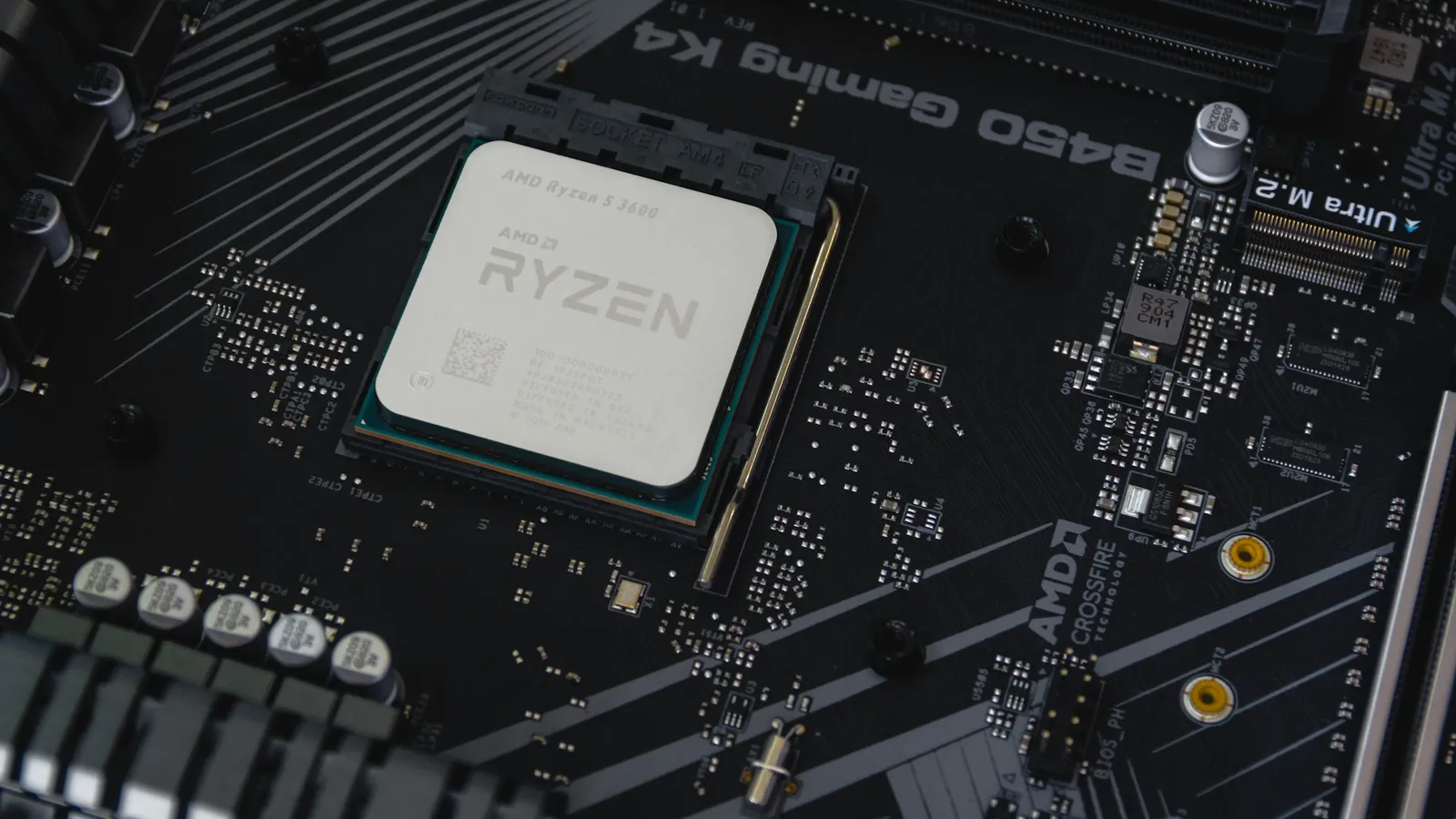
For a brand-new build, buy the Ryzen 5 7600X at $208.34. It is both faster than the Ryzen 5 5600X — about 19% ahead in 1080p gaming — and, on our shelves right now, cheaper as a bare chip than the 5600X's $238.99. The only reason to buy a 5600X new today is that you already own an AM4 motherboard and DDR4 memory. Dropping the chip into that board reuses hundreds of dollars of parts; the 7600X forces a new AM5 board and a fresh DDR5 kit. The chip price favors the newer part — the platform around it decides the rest.
The confusion here is that "older" usually means "cheaper," so people assume the 5600X is the budget pick. As a processor it is not: the newer Zen 4 part undercuts it in our catalog. What actually costs money is the platform. AM5 is DDR5-only, and with DDR5 prices still elevated through 2026, the board-plus-memory bill is where the two paths really split apart.
Gaming performance
Both chips are six-core, twelve-thread parts, so this is a generation gap, not a core-count gap. Zen 4 brings higher clocks (4.7/5.3 GHz vs the 5600X's 3.7/4.6 GHz), a newer branch predictor, and faster DDR5 memory. In TechSpot's launch review, run at 1080p on an RTX 3090 Ti to expose the CPU on purpose, the 7600X landed about 19% ahead of the 5600X on average.
That 19% is the best case, not the typical one. It assumes a top-tier GPU and a resolution chosen to remove the GPU as the limit. The gap also swings game to game: The FPS Review measured only an 11% lead in F1 2022 at 1080p, with larger spreads in other titles, and some older GPU-bound tests showed the two chips effectively tied. Move to 1440p with a mainstream card and the GPU becomes the bottleneck in most games, so the 5600X and 7600X converge to within a frame or two.
| Ryzen 5 5600X | Ryzen 5 7600X | |
|---|---|---|
| Architecture | Zen 3 (2020) | Zen 4 (2022) |
| Base / boost clock | 3.7 / 4.6 GHz | 4.7 / 5.3 GHz |
| 1080p gaming (TechSpot) | baseline | ~19% faster |
| Socket / memory | AM4 / DDR4 | AM5 / DDR5 |
| TDP / stock cooler | 65W / Wraith Stealth included | 105W / none included |
| Price (TechCortex) | $238.99 | $208.34 |
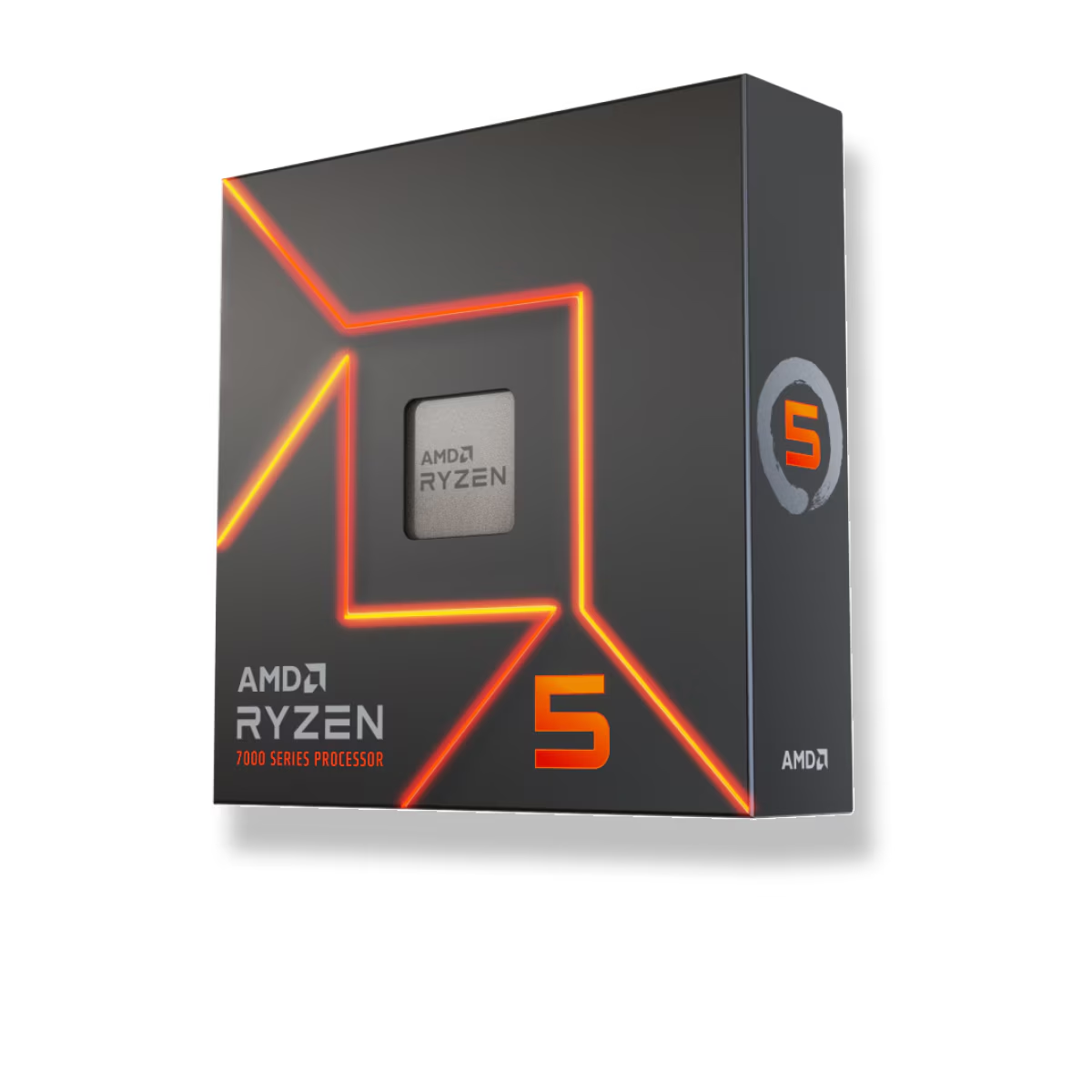
The real cost is the platform, not the chip
Compare the two processors in isolation and the 7600X wins outright: faster and cheaper. The reason anyone still considers a 5600X is everything that bolts to it.
The 5600X uses Socket AM4 and DDR4. If you already run an AM4 board, the chip is a drop-in: you keep your motherboard, keep your DDR4, and keep the cooler you already have. For a lot of people that turns a "new CPU" into a sub-$250 total bill with zero rebuild.
The 7600X uses Socket AM5 and only takes DDR5. There is no DDR4 option on the platform. So a 7600X build adds an AM5 motherboard and a DDR5 kit on top of the chip, and DDR5 is not cheap in 2026 — memory prices have risen sharply as manufacturers shift capacity toward AI and server demand (eTeknix). On a fresh build with no parts to carry over, that extra platform cost is simply the price of a modern socket. On an existing AM4 machine, it is money you did not have to spend.
Heat and cooling tilt the same way. The 65W 5600X ships with AMD's Wraith Stealth cooler and runs quietly on it. The 7600X is a 105W-class part that comes with no cooler at all, so you are buying one — and it runs warmer, so a cheap stock-style cooler is not the right match. If you are weighing options there, our air cooler vs AIO breakdown covers what each chip actually needs.

The socket you are buying into
This is where the 7600X earns its keep beyond the frame-rate chart. AM5 is a current socket, and AMD has said it will support AM5 through 2029. The same AM5 board you buy for a 7600X can later take a faster Ryzen — including a 3D V-Cache gaming chip — without a rebuild. If a bigger upgrade is on your horizon, 7600X vs 7800X3D shows what that step up looks like on the same platform.
AM4, by contrast, has reached the end of its line. It is a mature, well-stocked platform, but no new generation is coming to it — the fastest parts it will ever accept already exist. A 5600X is the floor of a platform that has already hit its ceiling. That is not a reason to rip out a working AM4 system, but it is a reason not to start a new one on AM4 in 2026.
Price and availability
Both chips are in stock, and as processors the newer one is the cheaper one:
- Ryzen 5 5600X — $238.99
- Ryzen 5 7600X — $208.34
That is a $30.65 edge for the faster, newer chip. The decision never comes down to those two numbers, though — it comes down to what each one sits on. If you have an AM4 board and DDR4 already, the 5600X's true cost is just the chip, and the 7600X's true cost includes a new board and a DDR5 kit. If you are starting from nothing, the 7600X is both cheaper and faster, and AM5 gives you somewhere to go next. You can price a full AM5 build — board, cooler, and memory included — in our PC Builder before you commit. Choosing between Intel instead? The 7600X vs Core i5-14600K comparison is the one to read next.
Who should buy which
- Buy the Ryzen 5 7600X if you are building a new PC. It is faster in games, cheaper as a chip, runs on a socket with years of upgrades ahead, and leaves the door open to a future gaming chip on the same board.
- Buy the Ryzen 5 5600X only if you already own a working AM4 motherboard and DDR4 memory and want the cheapest drop-in that keeps that platform intact. The money you save on a new AM5 board and DDR5 kit dwarfs the $30 chip difference.
- Honest downside of the 7600X: the chip is the cheap part. Its 105W heat means buying a cooler, AM5 is DDR5-only with no cheap DDR4 escape, and DDR5 prices are high right now — so the total build cost is well above the sticker.
- Honest downside of the 5600X: it is the slower chip on a dead-end platform, and as a new purchase it costs more than the faster 7600X. Outside of an AM4 upgrade, there is no good reason to pick it.