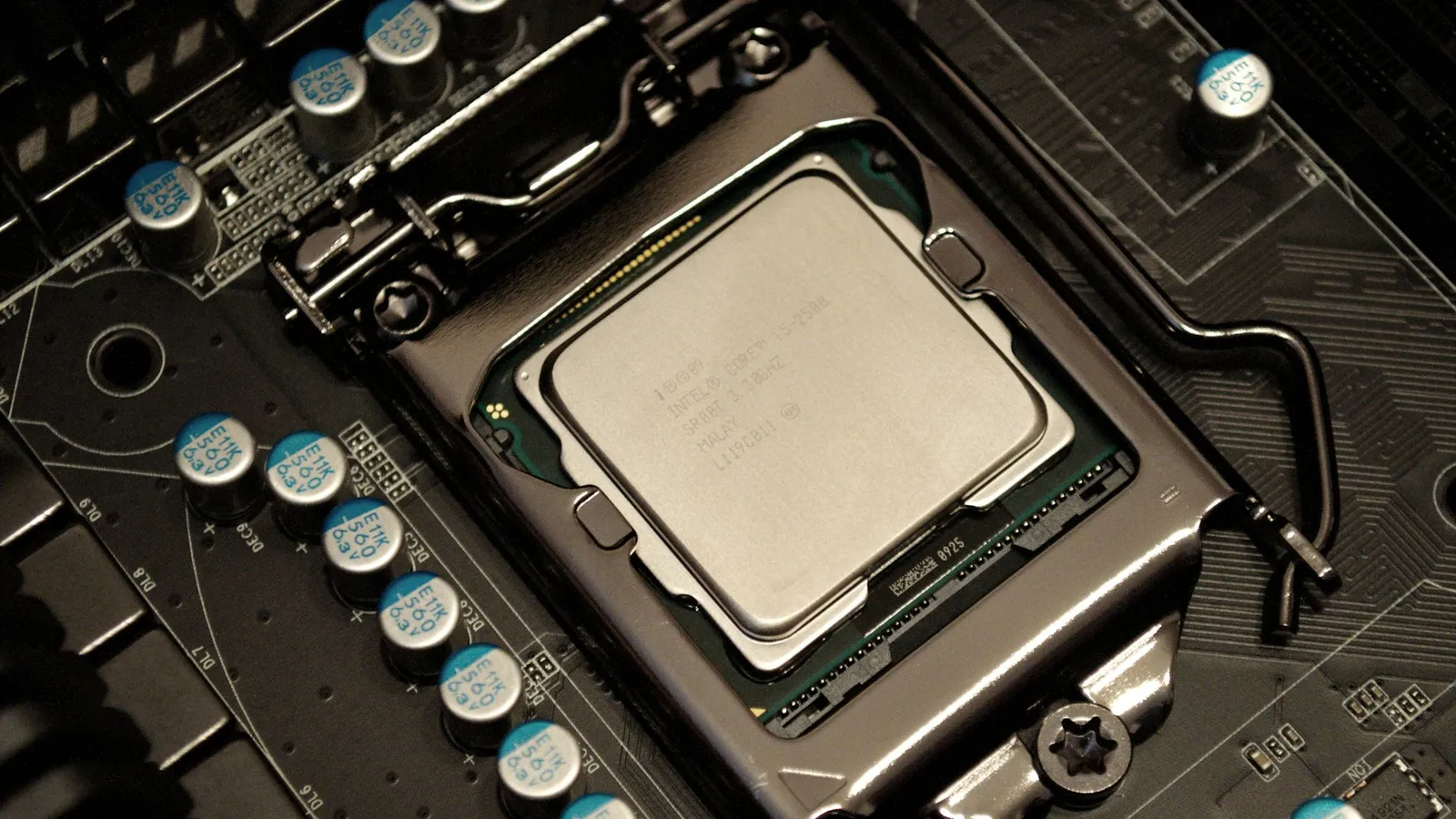

If you game at 1440p on a mainstream graphics card, the Core i5-12400 is the smarter buy and the Core i5-14600K's extra $108 is mostly wasted. The 14600K is the faster processor on paper and in CPU-bound tests, but at 1440p the GPU sets your frame rate, not the CPU, so both chips land in the same place. Pay the premium only if you game at high-refresh 1080p, play CPU-heavy simulation and esports titles, or also do real multi-threaded work.
The confusion comes from the spec sheet. The 14600K lists 14 cores, 20 threads and a 5.3 GHz boost against the 12400's 6 cores, 12 threads and 4.4 GHz. That looks like a different class of chip, and in productivity it is. In games, most of those numbers never get used.
Specs that actually matter
The two chips share a socket (LGA 1700) and both run DDR5 or DDR4, so a build around either one uses the same class of parts. Where they diverge is core layout, clocks and power.

| i5-12400 | i5-14600K | |
|---|---|---|
| Cores / threads | 6 P-cores / 12 | 6 P + 8 E (14) / 20 |
| P-core max boost | 4.4 GHz | 5.3 GHz |
| Smart Cache | 18 MB | 24 MB |
| Base / max turbo power | 65 W / 117 W | 125 W / 181 W |
| Multiplier | Locked | Unlocked |
| Price (TechCortex) | $261.33 | $369.98 |
Specs from Intel ARK. The 12400 is a locked, all-P-core design that sips power. The 14600K is an unlocked chip with eight efficiency cores bolted on and roughly triple the peak power draw. Those E-cores are the whole story, and games barely touch them.
Gaming performance
A modern game engine spreads its heavy work across a handful of threads. Six fast P-cores — which both chips have — cover that comfortably. The 14600K's eight E-cores mostly sit idle while you play, which is why the on-paper gap collapses in real frame-rate tests.
The 14600K is genuinely faster when the CPU is the bottleneck. That happens at 1080p with a top-tier GPU, in esports titles running at hundreds of FPS, and in simulation and strategy games that hammer a few threads. The FPS Review tested it on an RTX 4090 and summed up gaming as "more of a mixed bag" — the result "is greatly going to depend on the game, and your GPU performance."
The direction of travel is the important part. In Counter-Strike 2, the 14600K's lead was 15% at 1440p but only 10% at 4K: as the resolution climbed and the GPU became the limiter, the CPU advantage shrank. TechSpot's 14th-gen review tells the same story — the 14600K is a strong gaming chip, but its margins over cheaper parts depend on removing the GPU from the equation first.
Here is the honest version for a real build. Pair either CPU with a mainstream GPU — an RTX 5060 or 5060 Ti class card — and play at 1440p, and the graphics card is maxed out long before the processor is. In that scenario the 12400 feeds the GPU just as well as the 14600K, and you will not see the difference in a frame counter. The 14600K's gaming premium is real only at the settings most people with a mid-range GPU do not play at. If you are choosing a CPU specifically for high-refresh 1440p, our best CPU for 1440p gaming in 2026 guide covers where the extra money does and does not help.
Where the 14600K actually pulls ahead
This is not a one-sided fight. The 14600K's eight E-cores do real work the moment you stop gaming and start producing. Video exports, code compiles, batch photo edits, 3D rendering and running several heavy apps at once all scale with threads, and 20 threads beat 12 by a wide margin. If you stream while you play, encode video, or keep a stack of Chrome tabs and a game open together, the 14600K earns its price.
It is also the chip with headroom. The unlocked multiplier lets you tune it, and the larger cache and higher clocks give it a longer useful life as games get heavier. The 12400 has none of that upside — it runs at its rated clocks and that is that.
Price and platform
At TechCortex the Core i5-12400 is $261.33 and the Core i5-14600K is $369.98. The $108.65 gap is only the start of the real cost difference.
The 12400 is happy on a budget B760 board and ships with a stock cooler that handles its 117 W just fine. The 14600K's 181 W peak wants a capable air or liquid cooler, and to unlock its tuning you really want a Z-series board — which adds cost again. We break down that board choice in B760 vs Z790 for the i5-14600K. Count the cooler and board and the 14600K build can run $150–$200 more than a 12400 build, not $108. You can price out both in our PC Builder with compatibility checks.
Who should buy which
- Buy the i5-12400 if you game at 1440p on a mainstream GPU, want the lowest-cost modern gaming platform, and do little heavy multi-threaded work. It captures nearly all the gaming experience for well over $100 less once cooling and board are counted.
- Buy the i5-14600K if you game at high-refresh 1080p with a strong GPU, play CPU-bound sim/strategy/esports titles, or do real content creation, compiling or multitasking. The eight extra E-cores and the tuning headroom are what you are paying for — not the frame rate in a GPU-bound game.