
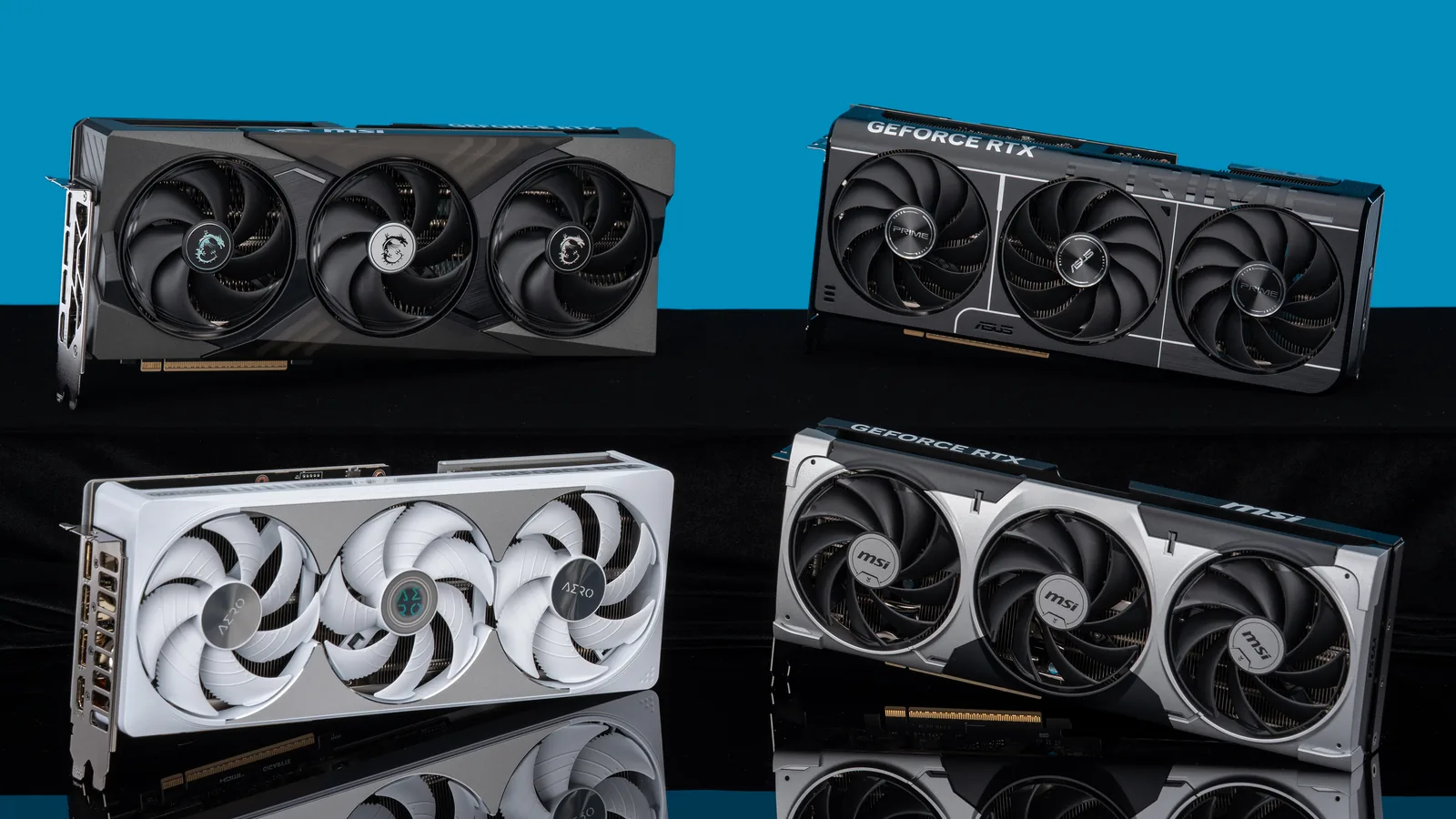
For 1440p gaming, buy the RTX 5070. It runs about 30% faster than the RTX 5060 Ti 16GB — Tom's Hardware measured the 5070 31% faster at 1440p, 27% faster at 1080p, and 33% faster at 4K in rasterized games (Tom's Hardware) — while costing only about 14% more in our catalog. The catch that makes people hesitate is real but narrow: the cheaper 5060 Ti carries 16GB of VRAM against the 5070's 12GB. That extra memory matters for a handful of texture-heavy 4K titles and for creative or local-AI work, but not for the 1440p gaming most buyers of these cards actually do, where the 5070's raw horsepower wins every time.
The confusion comes from the badge on the box. "16GB" reads like the more future-proof number, and NVIDIA fed that anxiety by also shipping an 8GB version of the 5060 Ti that reviewers panned for running out of memory in modern games (Tom's Hardware). So VRAM worry is justified in general — it is just aimed at the wrong card here. The 16GB 5060 Ti is not memory-starved, and the 5070's 12GB is not either at 1440p. The real question is whether four extra gigabytes are worth trading away a third of your frame rate. For gaming, they usually are not.
Gaming performance: the 5070 wins by about 30%
In standard rasterized rendering — no ray tracing, native resolution — this is not a close fight. Testing both cards on a high-end CPU across its game suite, Tom's Hardware found the RTX 5070 ahead by 27% at 1080p ultra, 31% at 1440p ultra, and 33% at 4K ultra (Tom's Hardware). TechSpot's separate review reached the same conclusion from the other direction, calling the 5070 "35 to 43 percent" faster for "only 28 percent more money" at the cards' launch prices (TechSpot).
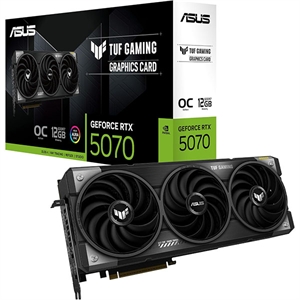
That gap is a full performance tier, not a rounding error. On the 5070, more games clear 60 FPS at 1440p ultra and 4K becomes genuinely playable in many titles with DLSS; on the 5060 Ti 16GB you are more often reaching for medium settings or upscaling to hold the same frame rate. If your monitor is 1440p and you want to run high or ultra without babysitting settings, the 5070 is the card that does it.
| RTX 5070 | RTX 5060 Ti 16GB | |
|---|---|---|
| Shader (CUDA) cores | 6,144 | 4,608 |
| VRAM | 12GB GDDR7 | 16GB GDDR7 |
| Memory bus / bandwidth | 192-bit / ~672 GB/s | 128-bit / 448 GB/s |
| Board power | 250W | 180W |
| Catalog price | $1,105.51 | $968.03 |
VRAM: where the 5060 Ti's 16GB actually helps — and where it doesn't
Here is the honest version of the memory debate. At 1440p, both cards have enough VRAM; most games at ultra settings stay under 12GB, so the 5060 Ti's extra 4GB sits unused. The 5070's 12GB becomes a real ceiling only at 4K with ultra texture packs, heavy mods, or path tracing — and in exactly those scenarios the 5060 Ti is too slow to deliver playable frame rates anyway. You would be running out of horsepower before you ran out of memory. The 16GB card wins a fight the 5070 mostly is not in.
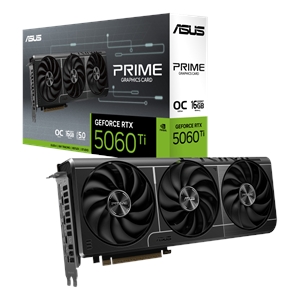
Where the 16GB genuinely earns its place is outside gaming: local AI models, large 3D scenes in Blender, and high-resolution video projects care about capacity more than raw speed, and a job that spills past 12GB will simply fail or crawl on the 5070 regardless of how fast the GPU is. If that is your workload, the cheaper card is the correct buy — not because it is faster, but because the 5070's one real weakness is that 12GB buffer. For a deeper look at how much memory different resolutions actually use, see our guide to how much VRAM you need for gaming.
Power, heat, and the rest of the build
The 5060 Ti's 180W board draws 70W less than the 5070's 250W. That is not a headline number, but it changes what you can build around it: the 5060 Ti runs cooler and quieter, fits a small-form-factor case more comfortably, and is safe on a quality 550W supply where the 5070 wants more headroom. If you are upgrading an older prebuilt with a weak PSU, the lower-power card can save you from also replacing the power supply. Both cards, and a matched PSU and case, can be checked for fit and compatibility in our PC Builder, and every completed build ships with professional assembly and testing for $1.
Price in our catalog
At the time of writing, the RTX 5070 12GB is $1,105.51 and the RTX 5060 Ti 16GB is $968.03 — a gap of about $137, or 14%. Both are in stock. That is the detail that flips the usual value math: at launch MSRPs the 5070 cost 28% more than the 5060 Ti (TechSpot), so paying ~30% more for ~30% more performance was a wash. At the smaller 14% gap in our catalog, you get that same 30% performance step for a much thinner premium — which is what makes the 5070 the stronger buy here for anyone whose priority is frames.
Who should buy which
- Buy the RTX 5070 if you game at 1440p (or want 4K with DLSS), care about ray tracing, and want the most frames per dollar — 12GB is enough for these resolutions today, and the ~30% speed gain costs only about 14% more in our catalog. It is also the better pairing with a 1440p gaming GPU shortlist in mind.
- Buy the RTX 5060 Ti 16GB if your budget is tight, you are building in a small case or on a modest PSU, you want the cooler and quieter 180W card, or you do VRAM-heavy creative or local-AI work where 16GB of capacity beats raw speed. This is the one case where the cheaper card is the right call for its memory, not despite its performance.