
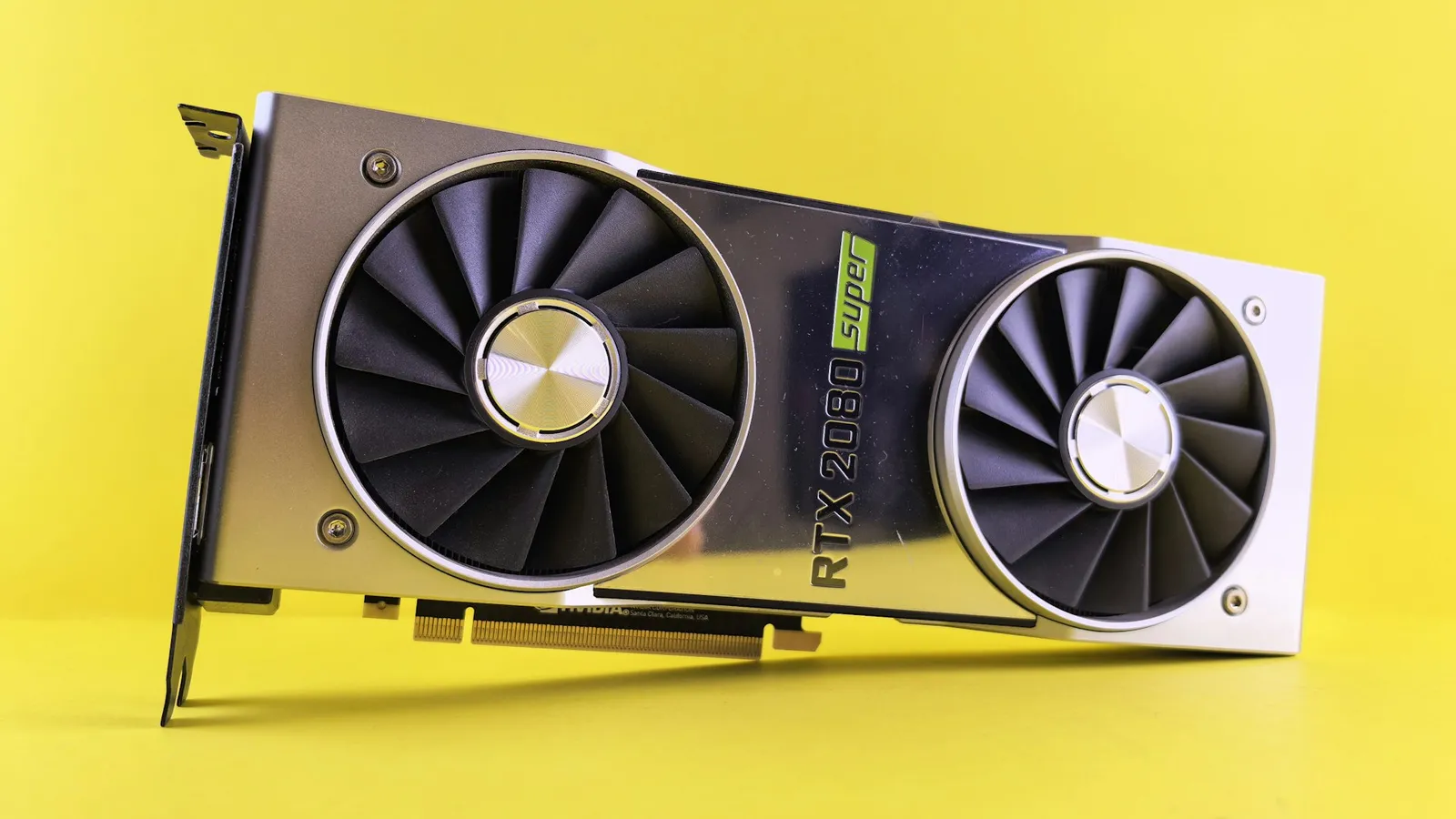
For almost everyone, buy the RTX 5070 Ti. The RTX 5080 is faster — about 10–15% in games, with the widest lead at 4K (Digital Trends) — but in our catalog it costs about $990 more ($2,117.30 versus $1,127.57), roughly 88% more money for a mid-teens frame gain. Worse for the 5080's case: both cards carry the same 16GB of GDDR7. The premium buys you shaders and clock speed, not a bigger memory buffer, so it does nothing for the one thing that actually stops a modern GPU in the heaviest 4K games. Pick the RTX 5080 only if you want the most attainable 4K frames below the RTX 5090 and the price gap genuinely doesn't factor into your decision.
Nvidia positions the 5080 as its "second-best" card and the 5070 Ti as the tier below it (TechPowerUp). The marketing gap looks large. The silicon gap is not: the 5080 has about 20% more CUDA cores on the same 256-bit bus and the same memory size. That is why this matchup is less "flagship vs mid-range" and more "the same class of card, one clocked and priced a tier higher."
Gaming performance: a mid-teens gap
Across game benchmarks, reviewers put the RTX 5080 roughly 10–15% ahead of the RTX 5070 Ti, and the margin depends heavily on resolution (Digital Trends). At 4K, where the 5080's extra shaders and slightly faster memory get fed the most work, the lead is at its widest. Drop to 1440p and it narrows, because at that resolution both cards are fast enough that the CPU and game engine start capping frame rates before either GPU is fully loaded.
Synthetic tests read a touch higher: 3DMark runs have shown the 5080 about 17% ahead of the 5070 Ti (Tom's Hardware). Synthetics tend to flatter the bigger chip because they load it cleanly without the CPU and memory stalls real games introduce, so treat that 17% as the ceiling and the 10–15% game figure as what you will actually feel.
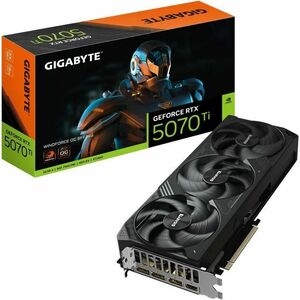
Put that next to the price and the math is unkind to the 5080. A card that costs about 88% more delivers a mid-teens performance bump. That is the opposite of the RTX 5060-tier matchups, where the frame gain roughly tracks the price step. Here the premium runs far ahead of the performance — which is the textbook signature of a diminishing-returns flagship, not a value pick.
The 16GB both cards share
This is the part that decides the matchup, and it is the same on both cards. The RTX 5070 Ti and the RTX 5080 each have 16GB of GDDR7 on a 256-bit bus (Nvidia, Nvidia). The 5080's memory runs a little quicker — 30Gbps versus 28Gbps, about 7% more bandwidth on the same bus width (Digital Trends) — but the capacity is identical.
That matters because in 4K gaming with ray tracing, ultra textures, and frame-generation buffers, VRAM capacity is what fills up first. When a game exceeds the framebuffer, you get texture pop-in, worse 1% lows, and stutter — and no amount of extra shaders fixes it, because the bottleneck is memory, not compute. Since both cards have the same 16GB, the 5080 does not buy you any more headroom against that wall. Where 16GB is enough, the 5080's compute lead shows up as that 10–15%. Where 16GB is not enough, both cards hit the same ceiling and the 5080's advantage shrinks toward it.
So the extra $990 is spending entirely on throughput inside the 16GB budget you already have on the cheaper card. For a lot of 4K gamers who lean on DLSS — which lowers the internal render resolution and therefore the VRAM load — that throughput is the least valuable thing to pay a near-double price for.
Power, PSU, and the rest of the build
The RTX 5070 Ti has a 300W total graphics power and Nvidia recommends a 750W supply; the RTX 5080 steps up to 360W and an 850W recommendation (Nvidia, Nvidia). Both use the 12V-2x6 power connector, so factor an adapter or an ATX 3.x PSU into either build.
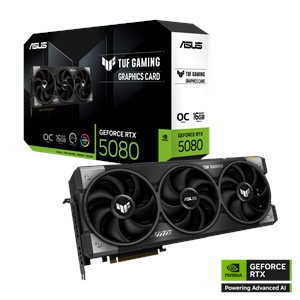
The practical takeaway: choosing the 5080 can also cost you a power supply upgrade if your current unit is a 750W model sized for the 5070 Ti. That is a hidden line item on top of the $990. If you are not sure what your build needs, our PSU wattage guide for RTX 50-series cards does the math for each card. Both are large, high-power cards, so check case clearance and airflow either way — neither drops into a compact case as casually as a 5060 does.
Price and availability in our catalog
Prices move, so here is where these two sit in our catalog as of writing:
| RTX 5070 Ti | RTX 5080 | |
|---|---|---|
| Price (our catalog) | $1,127.57 | $2,117.30 |
| CUDA cores | 8,960 | 10,752 |
| Memory | 16GB GDDR7 | 16GB GDDR7 |
| Memory bus | 256-bit | 256-bit |
| Total graphics power | 300W | 360W |
| Recommended PSU | 750W | 850W |
| MSRP | $750 | $1,000 |
Both cards sell above Nvidia's launch MSRP, which has been the norm for the RTX 50 series (Digital Trends). Note what the inflation does to the comparison: at MSRP the 5080 is $250 more than the 5070 Ti, a step you could argue for. At real prices the gap is nearly $1,000 for the same mid-teens performance — the case for the 5080 gets weaker, not stronger, the more both cards cost. You can drop either into a full build with automatic compatibility and power-supply checks in our PC Builder.
Who should buy which
- Buy the RTX 5070 Ti if you game at 1440p or 4K and want the most sensible high-end card. You give up about 10–15% of frames versus the 5080, keep the same 16GB of VRAM, and save roughly $990 — money better spent on a faster CPU, more storage, or simply kept.
- Buy the RTX 5080 if you specifically want the highest 4K frame rates available short of the RTX 5090, you do heavy GPU rendering or other compute work that scales with shaders, and the price gap is not a deciding factor for you.
The honest caveat sits over the 5080: it is the weakest value in this pairing. You are paying about 88% more for a mid-teens performance gain and no extra VRAM, and at 1440p the gap is smaller still. It is a fine card and a poor deal — buy it because you want the frames and can absorb the cost, not because you expect the price to reflect the performance. If you are looking one tier down, our RTX 5070 vs RTX 5070 Ti breakdown runs the same math at a lower price point.