
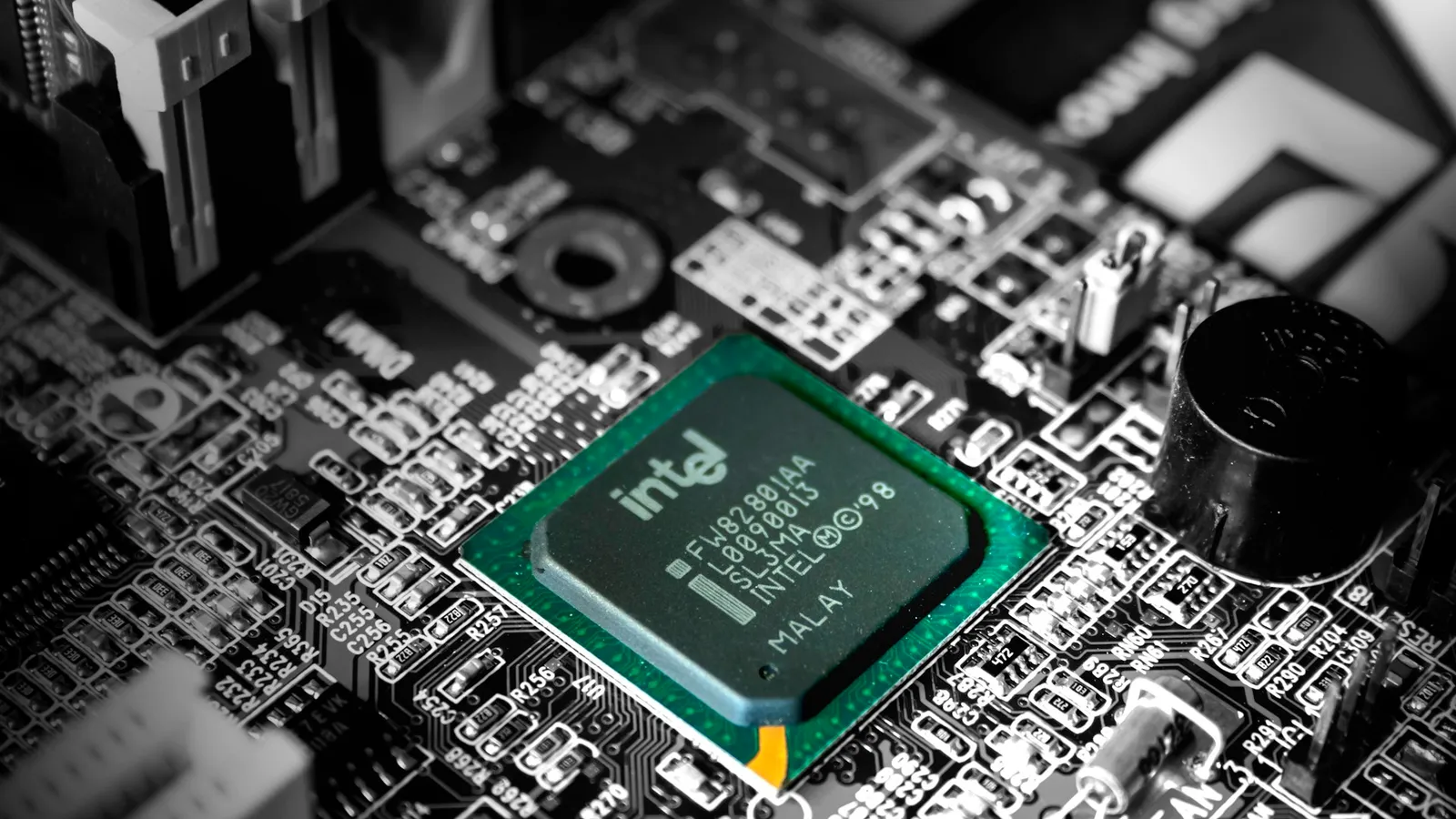
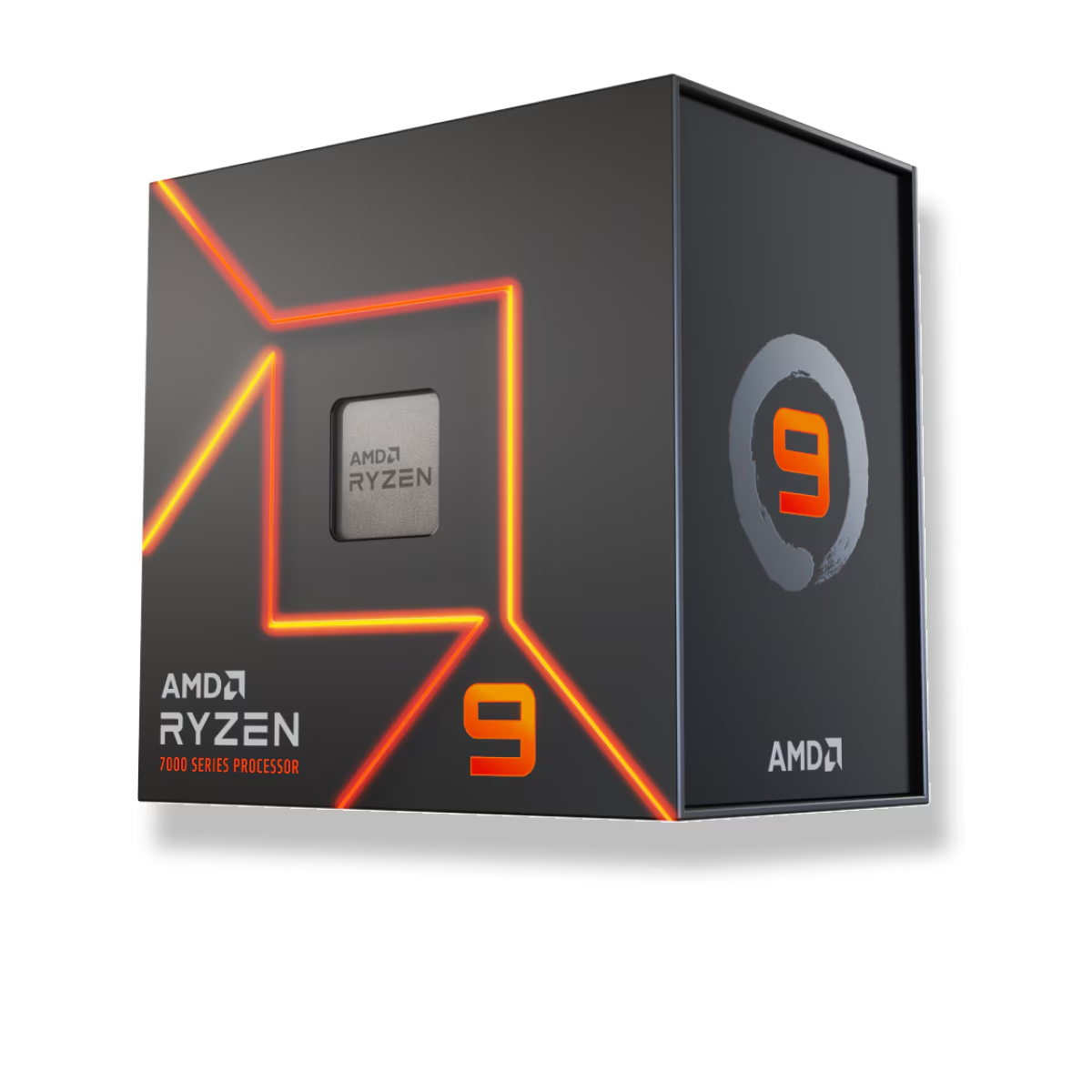
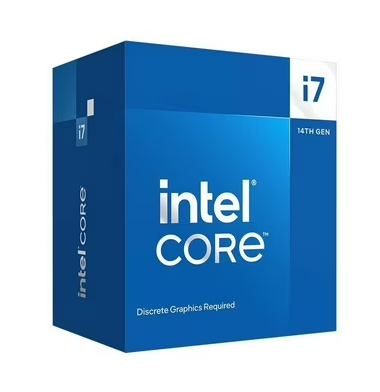
For most gaming-plus-productivity builds, the AMD Ryzen 9 7900X is the smarter buy over the Intel Core i7-14700K, and the deciding factor isn't frame rate. In games the two are close enough to call a tie, and the 14700K actually pulls ahead in heavy multithreaded work. But the 7900X is cheaper at TechCortex, draws less power, and sits on AM5 — a socket AMD has now committed to supporting through 2029. The 14700K's LGA1700 socket is a dead end: 14th Gen is the last generation it will ever take. Buy the 14700K only if you want the strongest multithreaded chip of the two or you already own DDR4 you'd like to keep.
The question comes up because these two land at almost the same price and look like direct rivals: a 12-core AMD chip against a 20-core Intel chip, both aimed at people who game and also render, compile, or stream. The core counts make the Intel look like the obvious winner, and in some workloads it is. The catch is everything around the core count — power, platform, and where the gaming crown actually sits.
Gaming: effectively a tie, and neither is the value pick
If you are buying either of these primarily to game, start with the uncomfortable truth: neither is the right chip. In CPU-bound 1080p testing the 7900X and 14700K land within a few frames of each other, with the 14700K's higher gaming clocks giving it a marginal edge in some engines and the 7900X matching it in others. At 1440p and 4K the GPU becomes the limit and the gap closes to nothing.
What both of them lose to is AMD's 3D V-Cache. Tom's Hardware's 14th Gen review is blunt about it — the Ryzen X3D parts stay on top in gaming, and it isn't close in cache-sensitive titles. The Ryzen 7 7800X3D ($409.99) has 8 cores to the 7900X's 12 and the 14700K's 20, yet it beats both in CPU-bound games because its 96 MB of stacked L3 cache matters more for frame rate than extra cores ever will. We make the same case in our best CPU for 1440p gaming guide.
So the gaming verdict is simple: these two are a wash against each other, and a cheaper-than-the-14700K X3D chip beats them both. Pick between the 7900X and 14700K on the other things they do.
Productivity: where the 14700K earns its price
This is the 14700K's win, and it's a real one. Twenty cores (8 performance + 12 efficiency, 28 threads) beat the 7900X's 12 cores and 24 threads in most multithreaded work. GamersNexus's Chromium compile test had the 14700K finish in 80 minutes to the 7900X's 87 — roughly 8% quicker — and the gap widens in rendering, where the extra threads scale cleanly.
If your day includes long code compiles, Blender renders, heavy Handbrake exports, or running a game and a stream and a browser wall at once, the 14700K's thread count is worth paying for. The 7900X is no slouch — 12 full cores handle the same jobs fine — but it finishes a step behind on the heaviest ones.
The trade for those extra threads is heat and power, which is the next section.
| Ryzen 9 7900X | Core i7-14700K | |
|---|---|---|
| Cores / threads | 12C / 24T (all full cores) | 20C / 28T (8P + 12E) |
| Socket / platform | AM5 — supported to 2029 | LGA1700 — last generation |
| Memory support | DDR5 only | DDR4 or DDR5 |
| Rated max power | ~230W PPT (199W measured) | 253W max turbo |
| Chromium compile (GamersNexus) | 87 min | 80 min |
| Price at TechCortex | $375.99 | $448.97 |
Power, heat, and the cooler you'll have to buy
The 7900X carries a 170W TDP and GamersNexus measured it pulling 199W at the EPS12V cables under an all-core load. The 14700K is rated for up to 253W of maximum turbo power, and it behaves like it — this is a hot chip that dumps a lot of heat into your case and onto your cooler.
Neither CPU includes a boxed cooler, so factor cooling into both prices. The 7900X is the more forgiving of the two: a solid tower air cooler like the PCCOOLER RT500 ($70.99) will keep it in check. The 14700K wants more headroom — a large dual-tower air cooler or a 240–360 mm AIO — to hold its boost clocks without throttling. That extra cooling requirement is a real cost that narrows the 14700K's already-thin price gap.
There's also the elephant in the room for any 13th- or 14th-Gen buyer: the Vmin Shift instability that plagued these chips. Intel traced it to elevated voltages and shipped microcode fixes (rolled up in the 0x12B update, with a further 0x12F patch after) and extended the warranty on affected CPUs to five years. A 14700K on an up-to-date BIOS is protected, but it's a real piece of history to know about, and it means keeping your board firmware current is not optional on this platform.
Platform and upgrade path: the real tiebreaker
This is where the two genuinely diverge, and it's the reason the 7900X wins for most people. AMD builds the 7900X on AM5, and at Computex 2026 it committed to supporting the socket through 2029. A B650 board like the ASRock B650 PG Lightning ($189.77) that you buy for a 7900X today should take multiple future Ryzen generations with a BIOS update — you can drop in a faster chip later without replacing the motherboard or memory.
The 14700K sits on LGA1700, and 14th Gen is the last generation for that socket. Intel has moved on to LGA1851 for its Core Ultra parts. A B760 board like the Asus TUF Gaming B760-Plus WiFi ($226.64) is a fine board, but it's the end of the line: your only "upgrade" on it is a used 14900K. The one upside is memory — LGA1700 boards can run DDR4, so if you already own a DDR4 kit, the 14700K lets you carry it over and save on RAM.
Put plainly: the 7900X is a chip you can build a multi-year upgrade path around. The 14700K is a chip you buy for what it does today.
Price and value at TechCortex
At TechCortex the 7900X is $375.99 and the 14700K is $448.97 — the AMD chip is $73 cheaper before you even count the 14700K's heavier cooling needs. For a build that games and does mixed productivity, the 7900X gives you equal gaming, slightly lower multithread, lower power, a longer-lived socket, and a lower price. That's the value pick.
The 14700K justifies its premium in exactly one scenario: you lean hard on multithreaded work and want every one of those 20 cores, or you're reusing DDR4 to offset the cost. Outside that, you're paying more for a hotter chip on a dead-end platform.
And if gaming is the whole point, remember the 7800X3D ($409.99) beats both — see our 7800X3D vs 7900X breakdown for how much the cache actually buys you.
Who should buy which
- Buy the Ryzen 9 7900X if you want a balanced gaming-and-productivity chip on a platform with a real future, you'd rather spend $73 less, and you value lower power and a socket that takes future upgrades.
- Buy the Core i7-14700K if heavy multithreaded work is your priority and you want the higher thread count, or you already own DDR4 and want to reuse it — and you're ready to pair it with serious cooling.
- Skip both and get a Ryzen 7 7800X3D if gaming FPS is what you're really after; it beats both in CPU-bound games and costs less than the 14700K.
Building the whole system? Drop any of these CPUs into a compatibility-checked build in our PC Builder and it will flag the board, cooler, and memory that fit.