
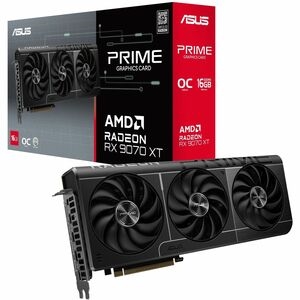
For 1440p and 4K gaming, the RX 9070 XT is the one to buy: it runs about 11-13% faster at 1440p and roughly 15% faster at 4K, and in our catalog it costs only about $88 more than the plain RX 9070. When the price step (about 9%) is smaller than the performance step, the faster card is also the better value. Pick the non-XT RX 9070 instead if you build small or quiet, or if you play mostly at 1080p — it draws 84W less, runs cooler, and gives up only single digits in frames at that resolution. Both cards carry 16GB of GDDR6, so this is not a VRAM decision. It is a performance-per-watt decision.
AMD set these two $50 apart at launch — $549 versus $599 MSRP — which makes the XT sound like a rounding error (GamersNexus). The two share the same Navi 48 die, the same 16GB memory, and the same 256-bit bus. What separates them is 8 compute units and about 84 watts of power budget. That is a narrower gap than most GPU siblings, and it changes the usual "is the faster one worth it?" answer.
1440p gaming performance
At 1440p — the resolution both cards are built for — the RX 9070 XT leads the RX 9070 by about 13% in aggregate testing (Tom's Hardware). Across a 100-plus game sample the average lands closer to 11% (GamersNexus). Either way, you are looking at low double digits — a real, repeatable gap, but not a generational one.
That number matters because of what it does to the price math. The XT costs about 9% more in our catalog and delivers about 11-13% more frames at 1440p. The performance you gain slightly outpaces the money you spend, which is unusual — GPU tiers usually charge a premium that outruns the performance. Here the XT is the rare "faster and better value" pick, as long as you are pushing the card hard enough to see the difference.
The catch is settings. If you run a 1440p esports title at 250+ FPS where your monitor or CPU is the limit, neither card is working hard and the 13% evaporates. The gap shows up in demanding, GPU-bound games with high settings — the exact scenario a $1,000 card is meant for.
Where the gap grows: 4K
Step up to 4K and the XT's lead stretches to about 15% (Tom's Hardware). The reason is the 8 extra compute units: higher resolutions feed more work to the shader array, so the wider XT pulls further ahead the harder you push pixels. If your monitor is 4K, that trend is the whole argument for the XT.
It is also where the honest caveat lives. Both cards are 4K-capable, not 4K-effortless. In the heaviest 2025 titles at native 4K with maxed settings, you will lean on FSR upscaling to hold a smooth frame rate on either card. The XT gets you more native headroom before you reach for it, but neither is a "max everything at native 4K" GPU.
Power, heat, and noise
This is where the plain RX 9070 earns its place. It runs a 220W board power target against the XT's 304W — 84 watts, about 38%, lower (GamersNexus). That is not a spec-sheet footnote. It means less heat dumped into your case, smaller and quieter cooling, and a lower total system draw that can let you keep a PSU you already own.
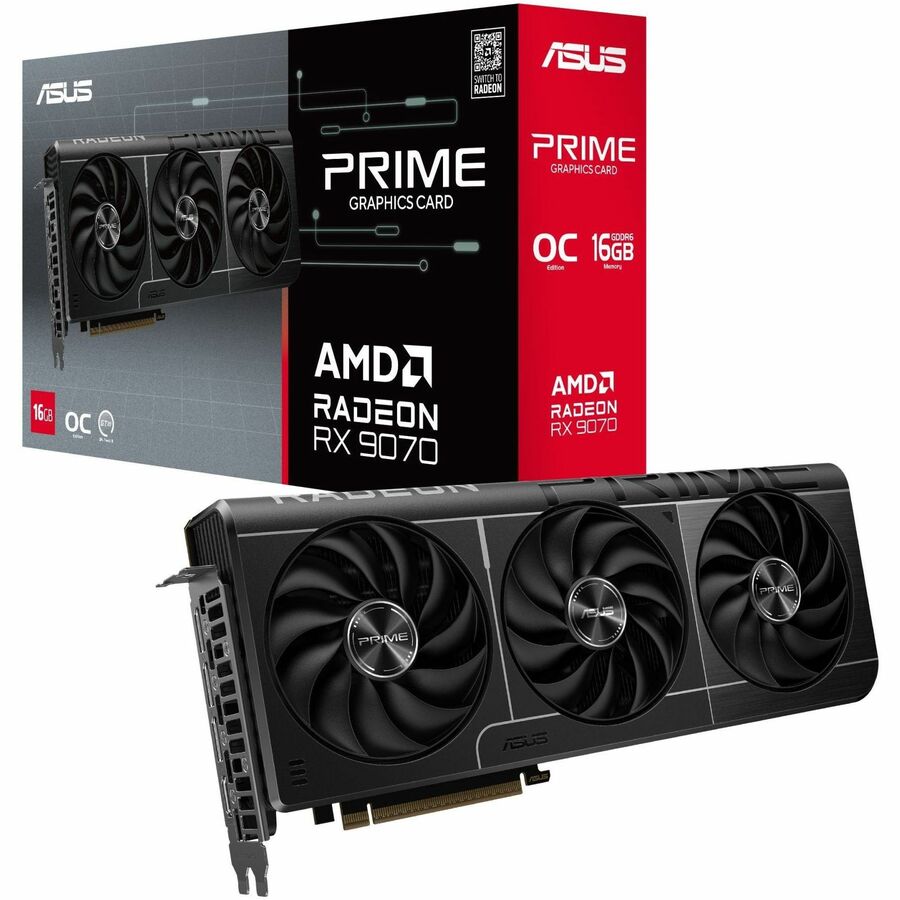
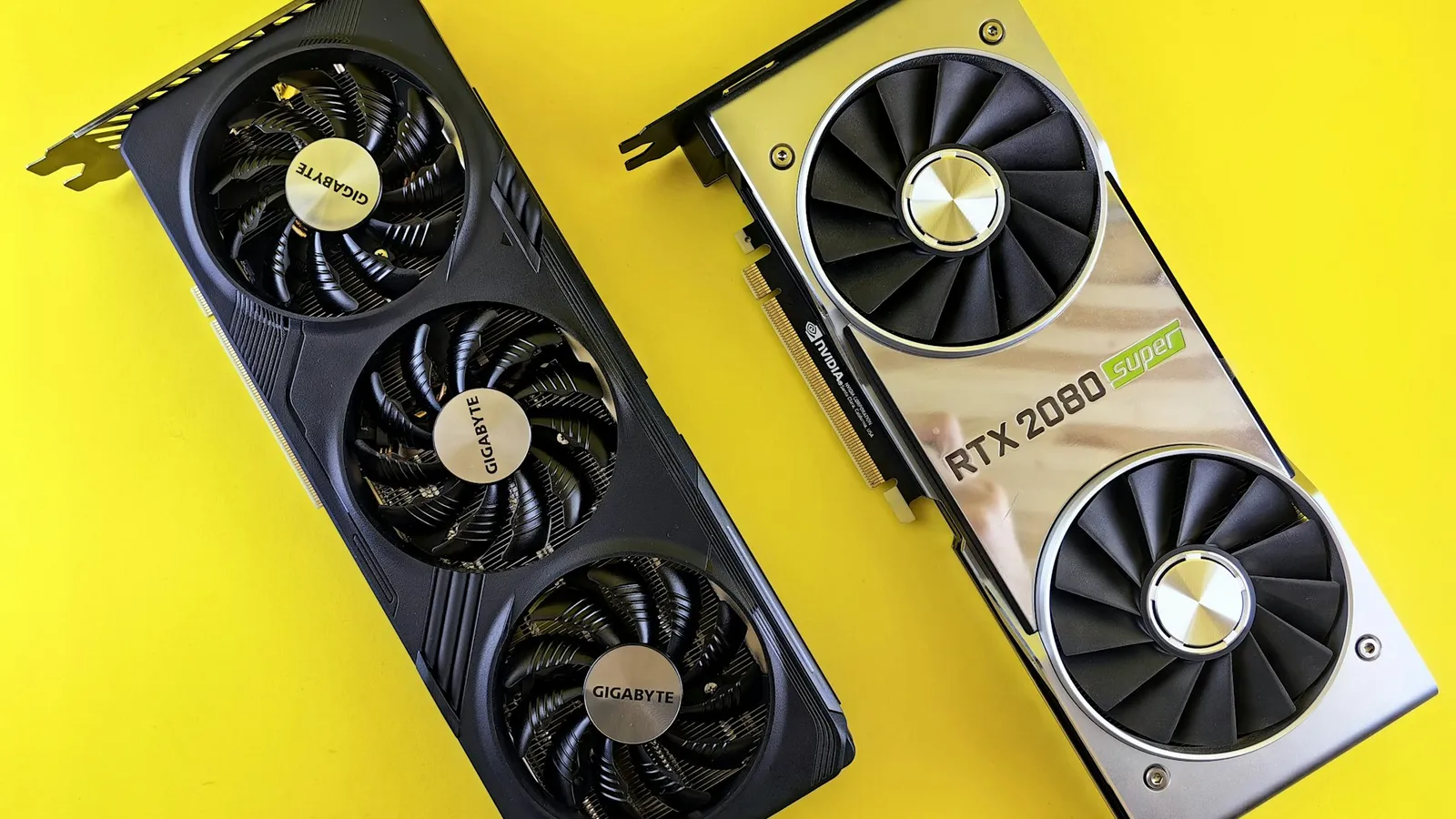
If you build in a compact case, care about noise, or want the simplest thermal life, the 9070's efficiency is a feature you feel every day — unlike a 13% frame gap you only notice with a counter on screen. Both are triple-slot-class cards over 300mm long, so before you commit to either, it is worth checking that it fits your case.
Price and availability in our catalog
Prices move, so here is what these cards cost in our catalog as of writing:
| RX 9070 | RX 9070 XT | |
|---|---|---|
| Price (our catalog) | $957.72 | $1,045.60 |
| Compute units | 56 | 64 |
| Board power | 220W | 304W |
| Memory | 16GB GDDR6 | 16GB GDDR6 |
| MSRP | $549 | $599 |
The $88 in-store gap tracks the $50 MSRP gap closely, and both sit above AMD's launch pricing — normal for RDNA 4, where demand has kept street prices above MSRP. You can drop either card into a full build with automatic compatibility checks in our PC Builder, which will size the power supply for the one you pick.
Who should buy which
- Buy the RX 9070 XT if you game at 1440p with high settings or at 4K, and you have the case airflow and PSU headroom for a 304W card. The ~9% price premium buys ~11-15% more performance — the frames outpace the dollars.
- Buy the RX 9070 if you build small or quiet, want the most efficient card of the two, or game mainly at 1080p where the gap narrows to single digits and both cards are already overkill. You keep 16GB of VRAM either way.
If your monitor is 1080p and staying there, the honest answer is that neither of these is the right card — you are paying for headroom you will not use, and a cheaper GPU will hold high frame rates just as well. These two make sense when the display is 1440p or 4K. For the NVIDIA side of this decision, our RTX 5070 vs RTX 5070 Ti breakdown runs the same math on the GeForce lineup.