
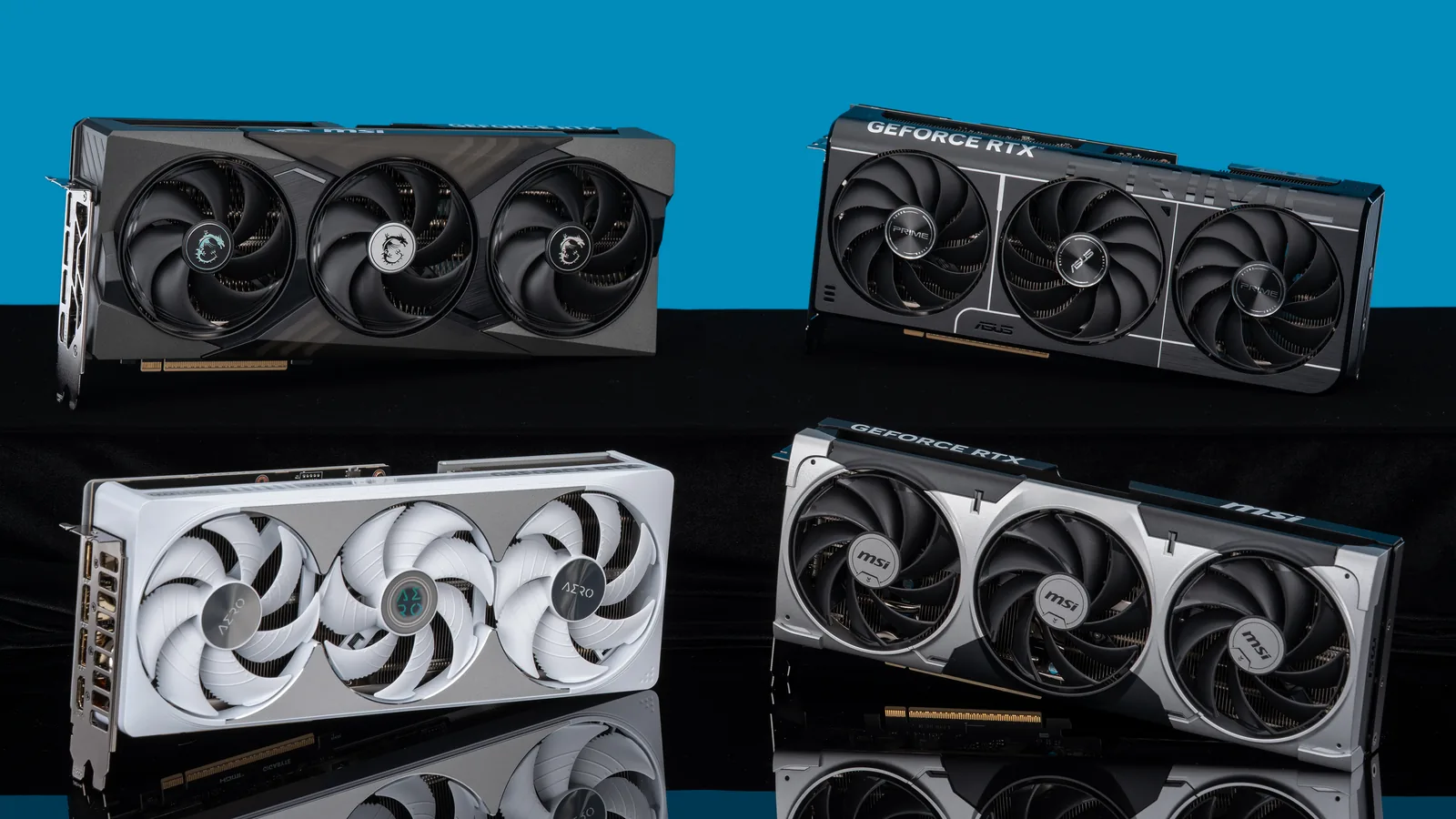
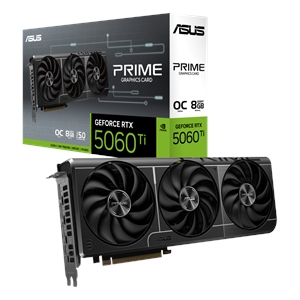
For 1080p gaming, the RTX 5060 Ti is the one to buy: it runs about 18% faster than the RTX 5060 in most games, and in our catalog it costs only about $89 more ($595.21 versus $506.25). When the frame gain roughly matches the price step, the faster card is the better value. But make the choice with your eyes open on one number: both cards carry just 8GB of VRAM. That shared ceiling — not the compute gap — is what limits either card in the heaviest 2025 games, and no amount of extra shaders on the Ti buys its way past it. Pick the plain RTX 5060 if you play mostly esports and older titles at 1080p and want to spend less; it hits the same VRAM wall as the Ti, just for less money.
Nvidia sells the Ti as the "step up to 1440p" card, but the two are cut from the same GB206 die and share the same 128-bit memory bus and the same 8GB framebuffer (GamersNexus). What separates them is 768 CUDA cores and 35 watts. That makes this a narrower decision than the marketing tiers suggest — and it moves the real question from "which is faster" to "how long will 8GB last."
1080p gaming performance
At 1080p — the resolution both cards are built for — the RTX 5060 Ti leads the RTX 5060 by about 18% in most rasterized games. Step up to 1440p and the gap widens to roughly 20-23% in titles that fit in 8GB: GamersNexus measured Resident Evil 4 at 112 FPS on the Ti versus 91 on the 5060, and Dragon's Dogma 2 about 22% ahead, both on an overclocked i7-12700KF (GamersNexus). The Ti pulls further ahead as resolution climbs because its extra 768 cores get fed more work.
That number matters because of what it does to the price math. In our catalog the Ti costs about 18% more and delivers about 18% more frames at 1080p. The performance you gain tracks the money you spend — unusual for GPU tiers, which usually charge a premium that outruns the performance. Here the Ti is the rare "faster and fair value" pick, as long as the game fits in 8GB.
The catch is settings. In a fast esports title where you are already past 200 FPS, the CPU or your monitor is the limit and the 18% evaporates. The gap shows up in demanding, GPU-bound games at high settings — which is exactly where the next section gets uncomfortable.
The 8GB ceiling both cards share
This is the honest part, and it applies to both cards equally. 8GB of VRAM is no longer comfortable headroom in 2025 — it is the limit, and you can hit it at 1080p, not just 4K.
The cleanest proof is Nvidia's own lineup. The RTX 5060 Ti also comes in a 16GB version built on the identical chip; the only difference is memory. In ray-traced games at 1080p ultra, the 8GB card runs about 26% slower than the 16GB one, versus only about 5% slower in rasterization-only games (Tom's Hardware). Same shaders, same clocks — the entire gap is the memory. Reviewers also logged texture pop-in and outright crashes on the 8GB card in titles like Indiana Jones and the Great Circle at 1080p ultra (Tom's Hardware).
That is the ceiling both of our cards sit under. When a game fits in 8GB, the Ti's compute lead is real and worth the $89. When a game does not — heavy ray tracing, ultra textures, frame-generation buffers — the Ti's extra cores stall waiting on memory and its lead over the 5060 shrinks. Neither card lets you turn on everything at 1440p in the most demanding new releases without dropping textures or leaning on DLSS. Buy either of these as a high-frame-rate 1080p card, not as a maxed-out 1440p card, and you will not be surprised later.
Power, size, and PSU
The RTX 5060 carries a 145W total board power against the Ti's 180W — 35 watts lower (TechPowerUp). Both are modest by modern standards and run on a single 8-pin PCIe connector, so either drops into a mainstream build without a PSU upgrade.
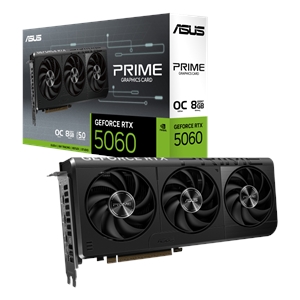
If you are reusing an older 450-550W supply or building in a compact case, the 5060's lower draw and cooler operation are a genuine convenience. If you are not sure what your build needs, our PSU wattage guide for RTX 50-series cards does the math. Neither card is long or power-hungry enough to cause the clearance headaches a 300W flagship does.
Price and availability in our catalog
Prices move, so here is what these cards cost in our catalog as of writing:
| RTX 5060 | RTX 5060 Ti | |
|---|---|---|
| Price (our catalog) | $506.25 | $595.21 |
| CUDA cores | 3840 | 4608 |
| Memory | 8GB GDDR7 | 8GB GDDR7 |
| Memory bus | 128-bit | 128-bit |
| Board power | 145W | 180W |
| MSRP | $299 | $379 (8GB) |
Both sit above Nvidia's launch MSRP, which is normal for current-gen budget cards where street prices have stayed above list. You can drop either into a full build with automatic compatibility checks in our PC Builder, which sizes the power supply and case for the card you pick.
Who should buy which
- Buy the RTX 5060 Ti if you game at 1080p high or dip into 1440p, and you want the most frames in this price class. The ~18% price premium buys about ~18% more performance, and its extra cores age slightly better in the games that still fit in 8GB.
- Buy the RTX 5060 if budget is the priority, you play mostly esports and older titles at 1080p, or you are building small and quiet on an existing PSU. You give up single-digit-to-teens percent of frames but hit the same VRAM ceiling for $89 less.
The honest caveat sits above both: if you expect to run 2025's heaviest titles with ray tracing at high settings, 8GB will be the thing that fails first — on either card. If that is your target, this is the wrong price class, and the money is better spent on a 16GB card. For the tier directly above these, our RTX 5070 vs RTX 5070 Ti breakdown runs the same math with a bigger VRAM buffer in play.