
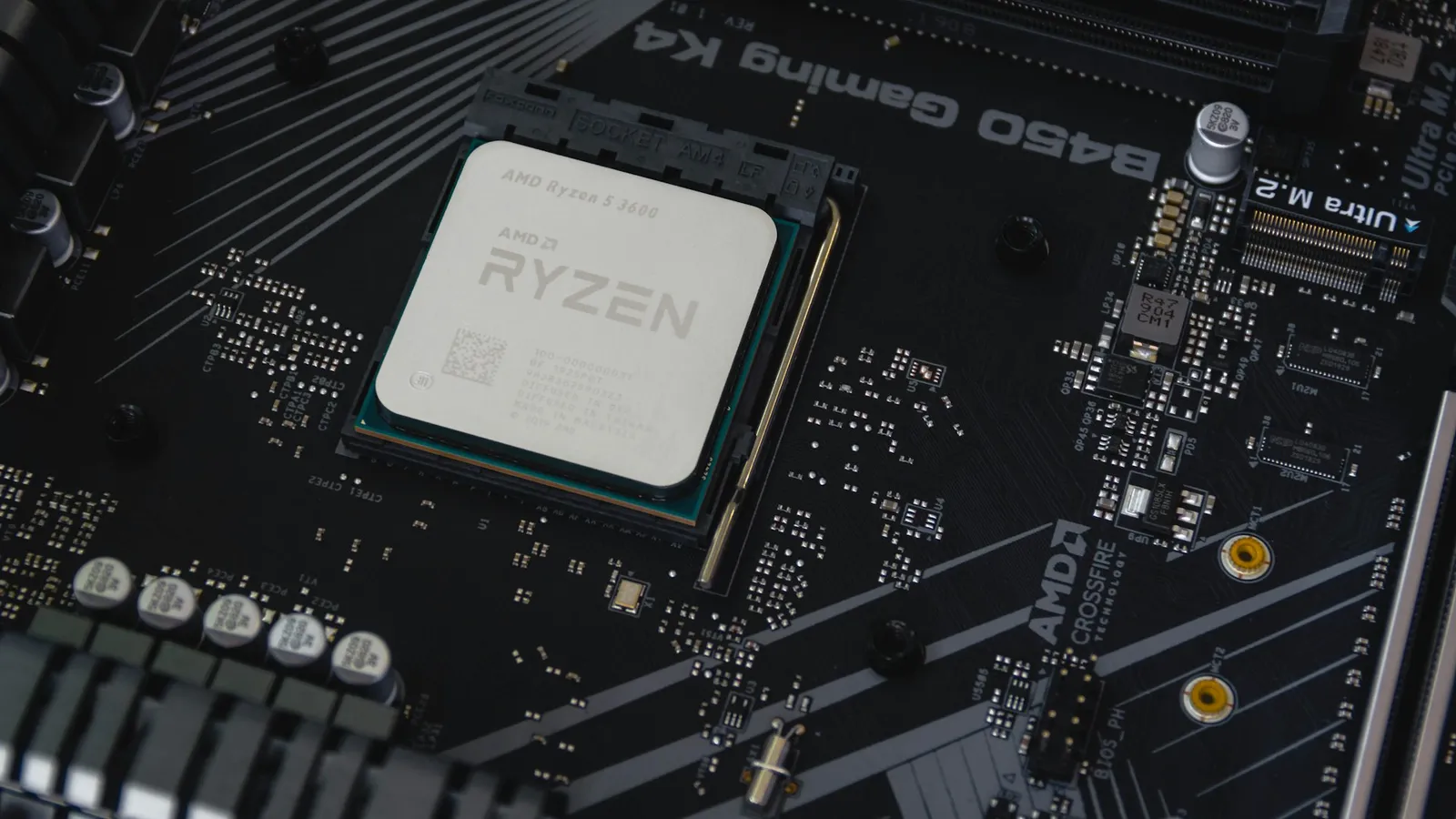
For gaming, buy the Ryzen 7 7800X3D. It runs a few percent faster than the Ryzen 9 9950X at 1080p and costs $280.69 less in our catalog. The 9950X only makes sense if you regularly render, encode video, or compile code, where its 16 cores roughly double the 7800X3D's multi-threaded output. Choose by workload, not by price tier: here the more expensive part is the slower gamer.
On paper the 9950X looks like the obvious upgrade — twice the cores, higher boost clocks, AMD's current flagship — while the 7800X3D sits a tier down and a generation back. But most games lean on eight cores or fewer, and the 7800X3D's 96 MB of 3D V-Cache feeds those cores better than raw clock speed does. That one design choice flips the result you'd expect from the spec sheet.
Gaming performance
The 7800X3D wins here, and it isn't close to the loss its price tag suggests. In TechPowerUp's 1080p test suite, the Ryzen 9 9950X3D — the cache-equipped version of this exact 16-core die — is roughly 10% faster than the plain 9950X. The 7800X3D lands within 3% of that 9950X3D. Work backward from those two figures and the two-year-old 7800X3D sits a few percent ahead of the 9950X in average frame rate.
The reason is the stacked L3 cache. Games are latency-bound more than they are core-bound: the CPU spends its time waiting on data, not saturating threads. The 7800X3D's 96 MB of 3D V-Cache keeps more of the game's working set close to the cores, so it stalls less often. The 9950X answers with higher clocks (5.7 GHz boost versus 5.0 GHz) and more cores, but neither helps a title that already runs out of an eight-core budget.
The gap is widest in the titles that thrash cache the hardest — large-world simulators, strategy games, and MMOs with dense scenes — where 3D V-Cache parts pull furthest ahead of standard Zen 5 chips (GamersNexus). At 1440p and 4K the two chips converge, because the GPU becomes the limit and the CPU stops setting the frame rate — but that convergence never turns into a 9950X lead in games.
| Ryzen 7 7800X3D | Ryzen 9 9950X | |
|---|---|---|
| Cores / threads | 8 / 16 | 16 / 32 |
| Boost clock | 5.0 GHz | 5.7 GHz |
| L3 cache | 96 MB (3D V-Cache) | 64 MB |
| TDP | 120 W | 170 W |
| 1080p gaming | A few % faster | Baseline |
Productivity and multi-core work
Flip the workload and the result flips with it. The 9950X has twice the cores and twice the threads, and anything that scales across them leaves the 7800X3D behind. In Cinebench R23 multi-core it posts 42,871 points to the 7800X3D's 17,762 — about 2.4x the output. Cinebench 2024 multi-core tells the same story at 2,340 versus 1,096 (cpu-monkey).
That maps directly onto real jobs: video encoding, Blender renders, code compilation, photo and RAW batch processing, running several virtual machines. If you export a timeline or render a scene and then sit and wait, the 9950X hands that time back — often cutting it roughly in half. Its single-core score is higher too (2,262 versus 1,811 in R23), so lightly-threaded desktop work and application launches feel a touch snappier.
The 7800X3D is not slow at these tasks — eight Zen 4 cores still handle everyday multitasking fine — but it was never built to be a rendering chip. If your day is a mix of gaming and content creation with real deadlines, the 9950X's extra cores stop being a luxury.
Power, cooling, and platform
The 9950X's 170 W TDP means it pulls more power and dumps more heat, and it will happily take everything a cooler can give it in all-core workloads. Plan for a strong 280 mm or 360 mm AIO, or a top-tier dual-tower air cooler, to keep it from throttling. The 7800X3D's 120 W envelope is far easier to tame; a good air cooler holds it comfortably, which also makes it the simpler chip to build quietly around.
One thing that is not a difference: the platform. Both drop into the same Socket AM5 boards and both run DDR5, so a B650, X670, B850, or X870 board takes either chip. The 9950X is fully unlocked for overclocking, while the 7800X3D's frequency is effectively locked (you tune it through Curve Optimizer, not multipliers) — but for gaming that ceiling costs you nothing, because cache, not clock, is doing the work.
Price and availability
At TechCortex the Ryzen 7 7800X3D is $415.41 and the Ryzen 9 9950X is $696.10 — a $280.69 difference. For a gaming-first build, that gap is money spent to make your frame rate slightly worse, plus a heavier cooling bill on top. For a creator build, it's the price of halving your render times.
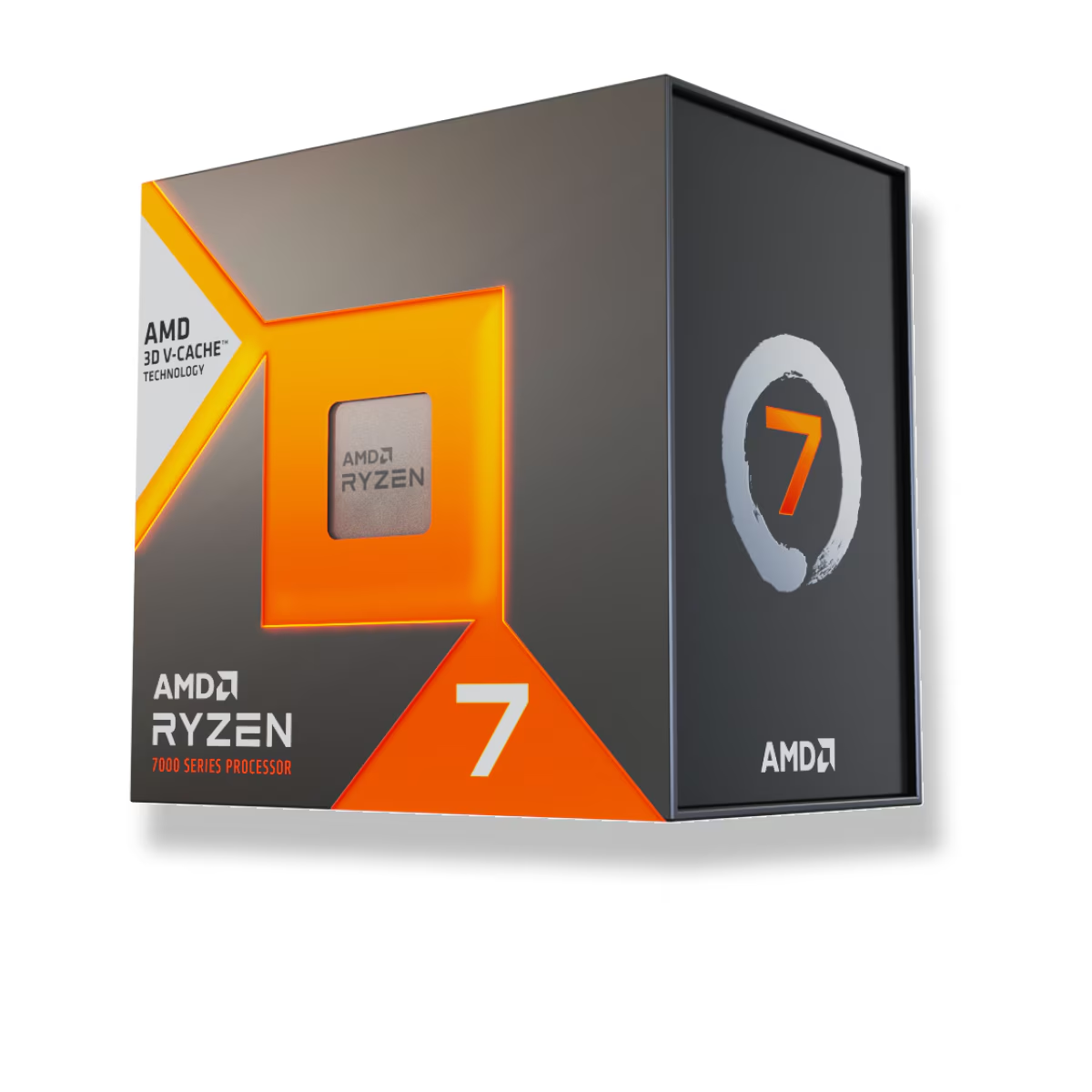
Both chips share the AM5 socket, so you can pair either with the same board, memory, and cooler and let the rest of the build stay identical. If you'd rather see the whole thing come together with compatibility checked as you go, drop your pick into the PC Builder and build around it.
Who should buy which
- Buy the Ryzen 7 7800X3D if gaming is the point of the machine — 1080p or 1440p high-refresh, esports, or a GPU-limited 4K rig. You get the higher frame rate, the lower price, and the cooler, quieter build. This is the default for most gamers.
- Buy the Ryzen 9 9950X if you render, encode, compile, or run heavy multi-threaded software often enough to feel it. You give up a few gaming frames and pay $280.69 more, and in return you roughly double multi-core throughput. If gaming is a side benefit of a workstation, this is the chip.
The honest version: for a pure gaming PC, the 9950X is the wrong buy. It is the more expensive processor and the slower one in the workload you care about. The only reason to pay for it is work that actually uses all 16 cores.