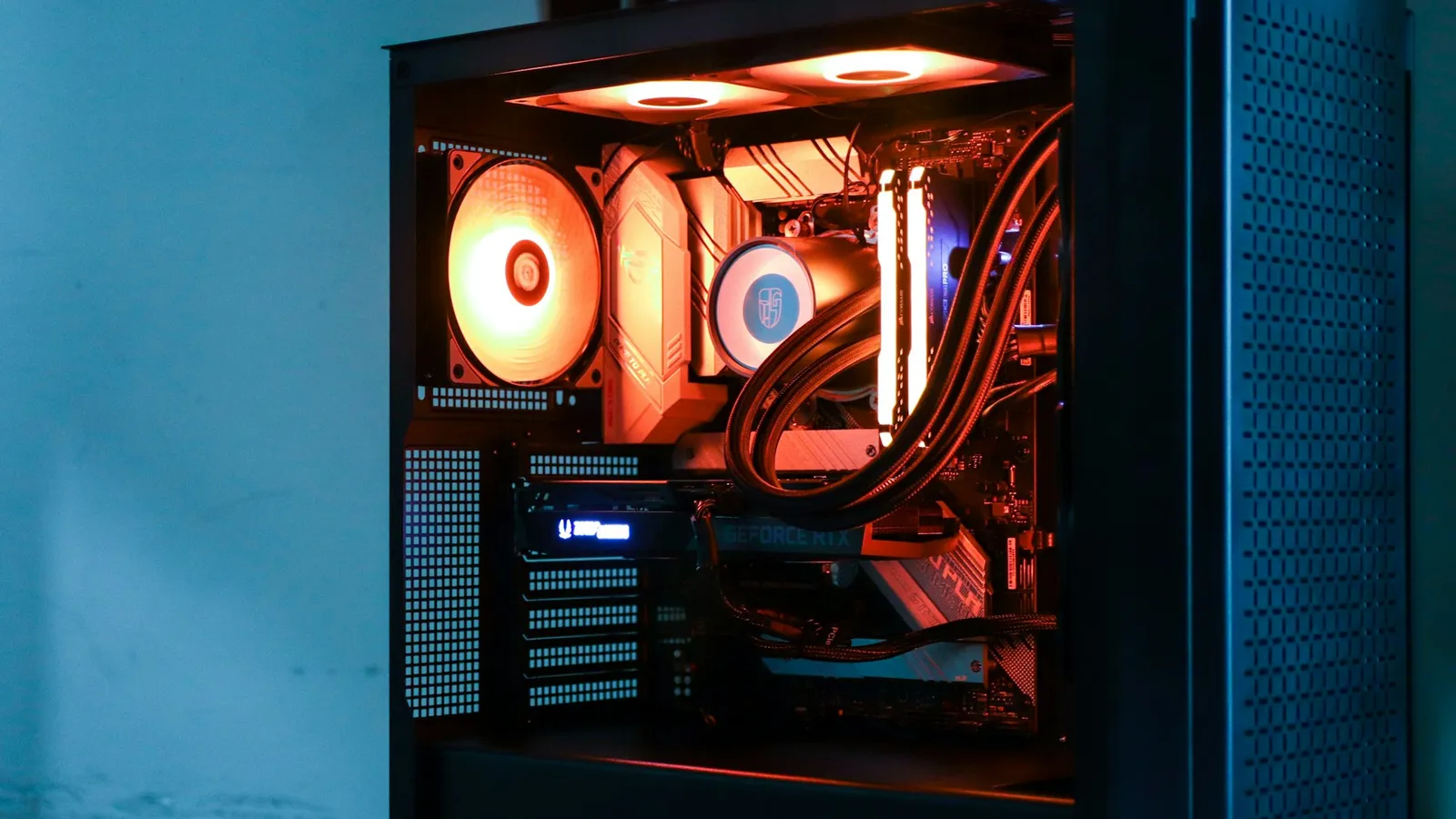

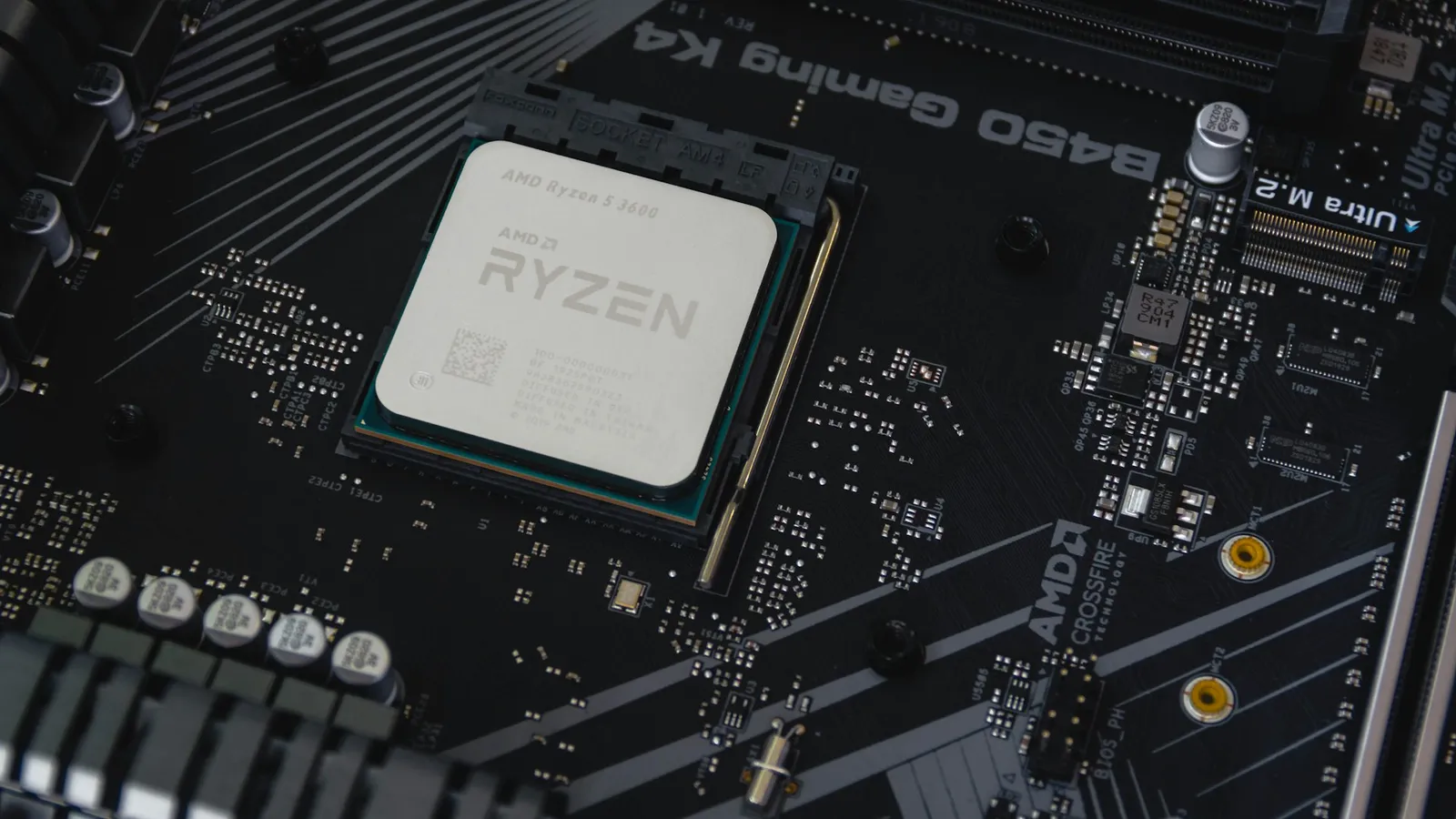
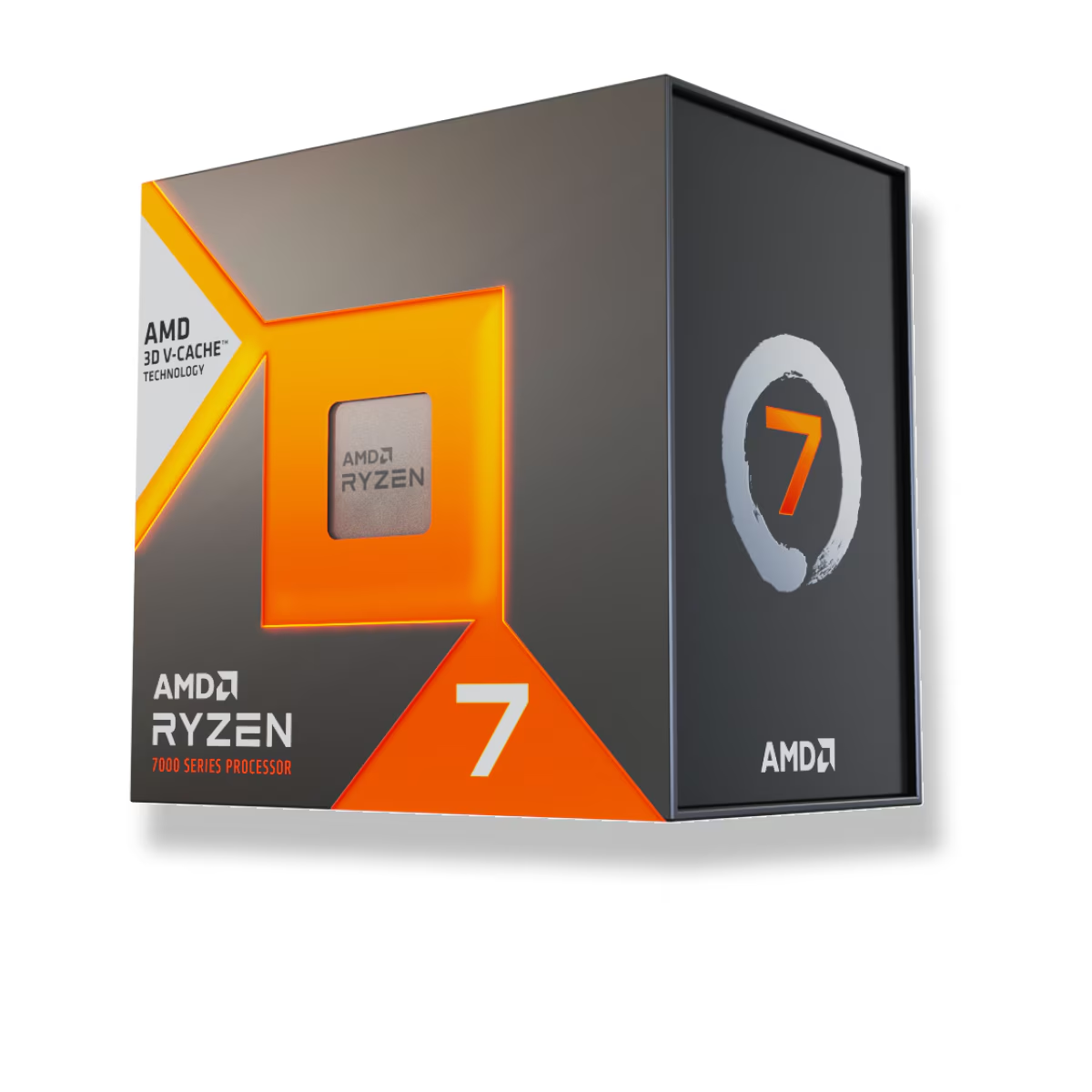
Yes, the Ryzen 7 7800X3D has integrated graphics — a basic AMD Radeon iGPU with 2 RDNA 2 compute units (128 shaders) that clocks between 400 and 2200 MHz (TechPowerUp). That is enough to boot the system, reach the BIOS, run a desktop, and play video with no graphics card installed. It is not enough to game. Treat it as a display output, not a GPU.
The question comes up because the 7800X3D breaks two old patterns at once. On AMD's previous mainstream chips, only the "G" APUs had graphics — a Ryzen 7 5800X gave you nothing on the HDMI port. And on Intel, the F-suffix parts drop the iGPU while the rest keep it. Ryzen 7000 changed the rule: every non-F desktop chip in the generation, the 7800X3D included, ships with a small RDNA 2 iGPU built into the I/O die (TweakTown).
What the iGPU actually is
The graphics block inside the 7800X3D is labeled "AMD Radeon Graphics" with no model number, and the specs are deliberately modest: 2 compute units, which works out to 128 shader units, on the RDNA 2 architecture. It idles at 400 MHz and boosts to 2200 MHz (Notebookcheck).
For context, that is the same 2-CU iGPU AMD put in nearly every Ryzen 7000 and 9000 desktop chip. It lives on the 6 nm I/O die next to the cores, so it shares the CPU's memory controller and uses a slice of system RAM as video memory. There is no dedicated graphics memory and no gaming silicon here — AMD built it so a desktop would post and show a picture, full stop.
The display engine is the genuinely useful part. It outputs to as many as four monitors and supports HDMI 2.1 and DisplayPort 2, so a productivity multi-monitor setup runs fine straight off the motherboard's video ports (Tom's Hardware).
What it can and can't do
Can:
- Boot the PC and show the BIOS/UEFI with no graphics card installed.
- Run Windows, a browser, office apps, and a multi-monitor desktop.
- Play back 4K video, since decoding is handled by fixed-function hardware, not the shaders.
- Keep the machine usable while a dedicated GPU is out for RMA or on the way.
Can't:
- Run modern games at playable frame rates. Two compute units is far below what even an entry-level game needs at 1080p.
- Replace a graphics card for anyone who bought a 7800X3D for gaming — which is essentially everyone who buys one.
That last point is the honest part: the 7800X3D is one of the fastest gaming CPUs you can buy, and its iGPU is the single weakest graphics option in a modern build. Those two facts live in the same chip. Pairing a $400-plus gaming CPU with its 2-CU iGPU and expecting to play anything current is the one mistake to avoid.
Why a display-only iGPU still matters
A graphics card that posts a picture before you install a GPU sounds like a technicality until you need it. It isn't.
It means you can assemble the build, update the motherboard BIOS, and confirm the CPU and memory are working before the graphics card ever goes in — useful when a new AM5 board needs a BIOS update for a given CPU. It means a dead or RMA'd graphics card doesn't take the whole PC offline; plug the monitor into the motherboard and keep working. And it makes troubleshooting far easier: if a system won't display, the iGPU lets you separate a GPU problem from a CPU, RAM, or motherboard problem.
On AMD's older chips without an iGPU, none of that was possible without borrowing a spare graphics card. That is the real value of the 2 CUs — not frames, but a PC that works before and without a discrete GPU. If you want to confirm the rest of your parts line up around the 7800X3D, our PC Builder checks socket, memory, and clearance as you go.
If you actually want to game without a graphics card
Then the 7800X3D is the wrong chip, and so is any X3D part. You want an APU — a processor built with a gaming-capable iGPU instead of a token one.
The Ryzen 7 5700G is the clearest example. It carries 8 Vega compute units against the 7800X3D's 2 — four times the graphics hardware — and it was designed to run esports titles and older games at 1080p on integrated graphics alone. The trade-off is real: the 5700G is an older AM4, Zen 3 chip with no 3D V-Cache, so for gaming with a dedicated GPU the 7800X3D is far faster. They solve different problems. The 5700G is "I want a working PC with no GPU for now." The 7800X3D is "I have a GPU and want the best gaming CPU to feed it."
The one thing neither chip changes: if your goal is high-FPS gaming, you still need a dedicated graphics card. The iGPU question only decides whether the PC runs without one, not whether it games without one.